The Day Your Body Stops Trusting You: Understanding Balance & Falls

Dr. Disha Shah By Dr. Disha Shah
05 Jun, 2026

Introduction: It Starts With a Small Moment

It usually doesn’t begin with a fall. 

It begins with a pause.

A hesitation while getting up from a chair. 

A slight imbalance while turning.

A moment where the body feels… unsure.

And slowly, without warning, a person who once walked confidently starts thinking:  

“What if I fall?”

That thought changes everything.

Walking becomes careful.

Steps become smaller.

Confidence slowly disappears.

This is the day the body stops trusting itself.


Balance Is Not Just About Strength


Most people believe that balance problems happen because of weakness.

But in reality, balance is much more complex.

It depends on a perfect coordination between three systems:

    • Brain (control centre) – processes movements and reactions

    • Inner ear (vestibular system) – senses position and motion

    • Muscles & joints (proprioception) – gives feedback about body position 

    When these systems work together, movements feel natural.

    But when even one of them slows down or becomes inefficient, the body loses its ability to

    react quickly and accurately.

    That is when imbalance begins.


    Why Do Falls Increase With Age?


    Falls are not random events. They are usually the result of gradual changes happening inside the body.

    1. Slower Brain Response

    With age or neurological conditions, the brain takes longer to process movement and correct imbalance.

    2. Reduced Muscle Strength

    Muscles, especially around the hips and legs, become weaker, affecting stability.

    3. Poor Joint Awareness

    The body loses its ability to sense position (proprioception), making movements less accurate.

    4. Vision Changes

    Reduced vision affects depth perception and coordination.

    5. Fear of Falling

    After one incident, fear sets in. This fear itself alters walking patterns and increases the risk of falls.

    Studies show that 1 in 3 adults above 65 experience falls every year, and many of these falls are preventable with proper rehabilitation.


    The Hidden Problem: Fear Changes Movement


    One of the most overlooked factors is fear.

    After a near fall or actual fall:

    • People start walking slowly

    • They avoid certain movements

    • They reduce activity

    This leads to:

    • More stiffness

    • More weakness

    • Even higher risk of falling

    • Fractures(especially hip fractures)

    • Loss of independence

    • Reduced quality of life

    It becomes a vicious cycle


    When the Body Compensates… and Fails


    When balance is affected, the body tries to compensate:

    • Using wider steps

    • Holding onto support

    • Avoiding turns or uneven surfaces

    But these are temporary adjustments.

    Over time, they create:

    • Abnormal walking patterns

    • Joint strain

    • Reduced independence

    And eventually, even simple activities like walking to the bathroom or climbing stairs become stressful.

    Balance problems are not just a symptom—they are a warning sign.


    How Geriatric Rehabilitation Makes a Difference


    The good news is:

    Balance can be improved at any age.

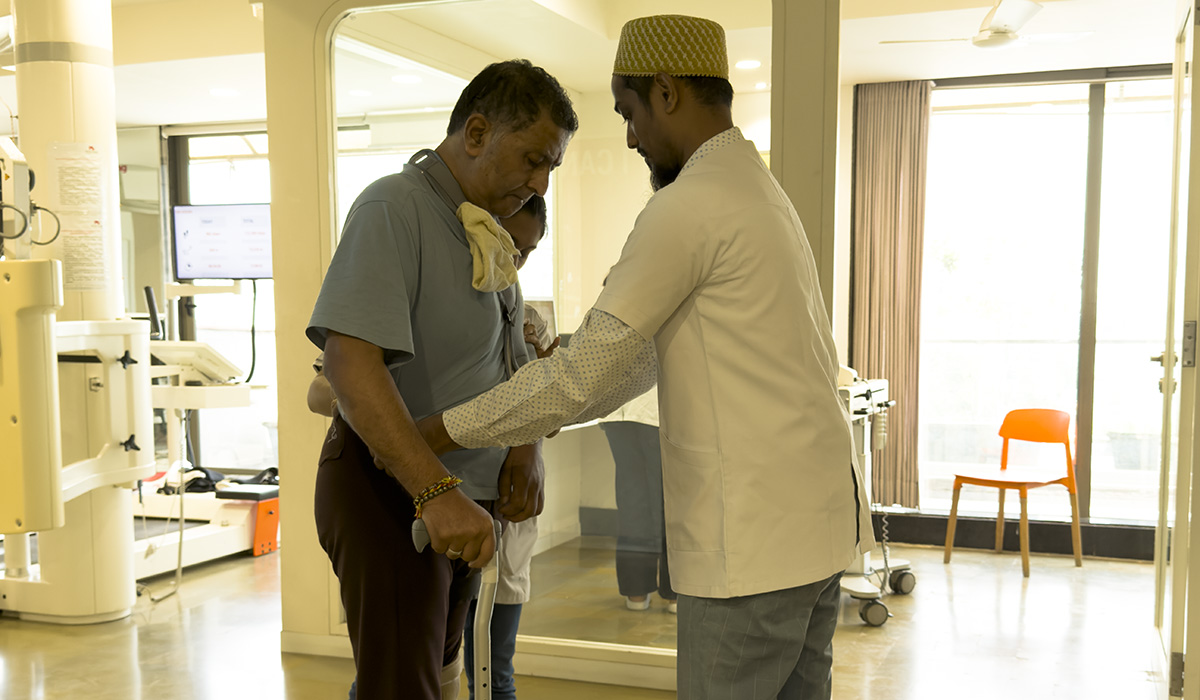
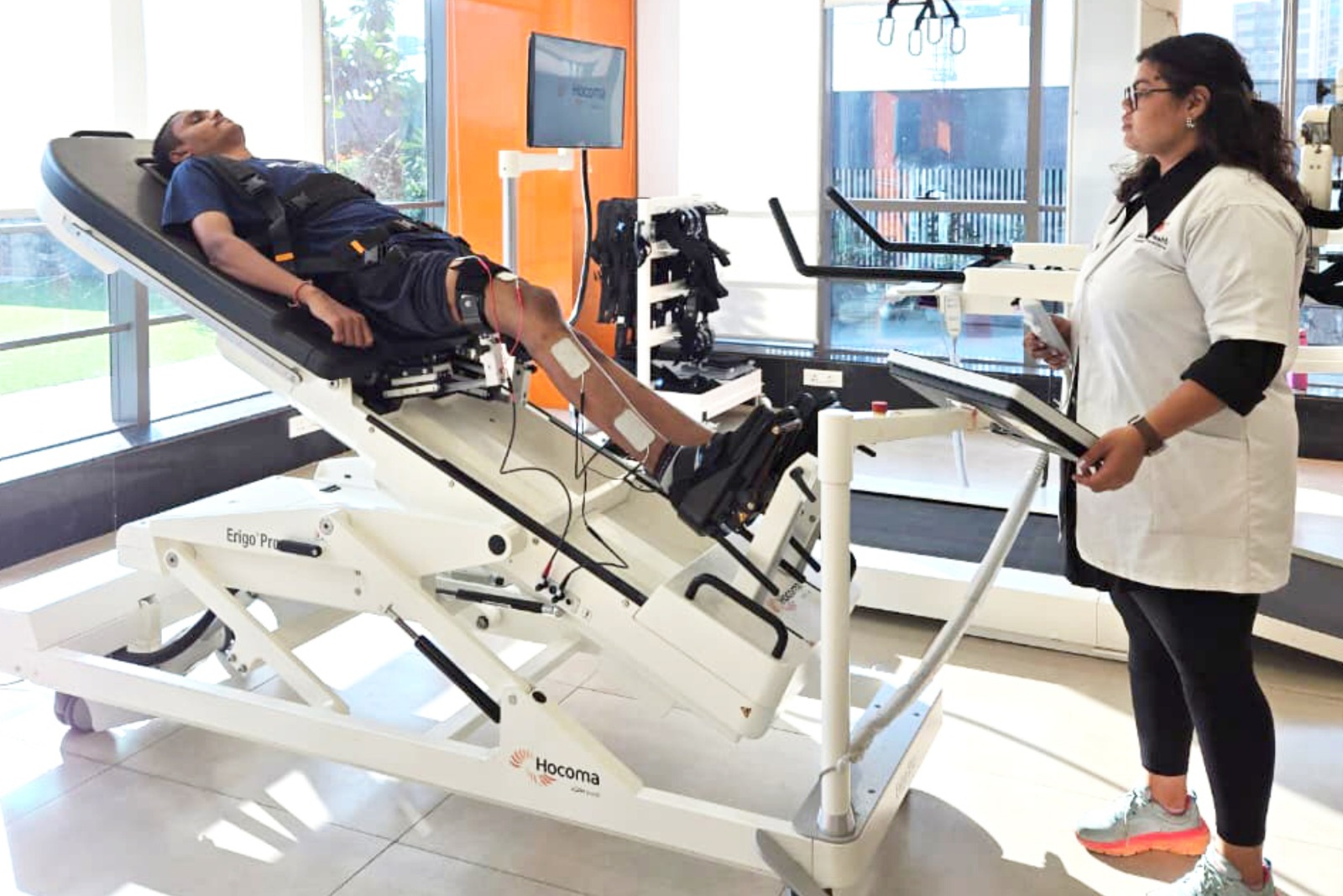
    At Mission Health, Geriatric Rehabilitation focuses on retraining the body and brain together


    Mission Health’s Approach to Balance & Fall Prevention


    1. Detailed Assessment

    We don’t just look at strength.

    We assess:

    • Balance reactions

    • Walking pattern (gait analysis)

    • Muscle coordination

    • Posture

    • Neurological response

    This helps us understand the real reason behind imbalance.


    2. Balance Retraining

    Specialised exercises are designed to:

    • Improve stability

    • Enhance reaction time

    • Train the body to respond to sudden changes 


    3. Strength & Stability Training

    Focus is on:

    • Core muscles

    • Hip and leg strength

    • Postural control


    4. Proprioception & Coordination Training

    We retrain the body’s ability to:

    Know where it is in space

    This is one of the most important aspects of fall prevention.


    5. Confidence Building

    As balance improves, fear reduces.

    Patients gradually regain:

    • Confidence in walking

    • Independence in daily activities

    • Freedom of movement 


    The Real Goal: Independence, Not Just Treatment


    Because falling is not just a physical event—it affects confidence, dignity, and lifestyle.


    Conclusion: Trust Can Be Rebuilt


    The day your body stops trusting you can feel frightening.

    But it is not the end of independence.

    With the right rehabilitation:

    • The brain can relearn

    • The body can regain strength

    • Balance can improve

    And most importantly,

    Confidence can come back.
    Enquire now

    Recent Blog Posts

    The Day Your Body Stops Trusting You: Understanding Balance & Falls
    05 June, 2026

    The Day Your Body Stops Trusting You: Understanding Balance & Falls

    It usually doesn’t begin with a fall. It begins with a pause. A hesitation while getting up from a chair.

    Dr. Disha Shah Dr. Disha Shah
    Ice or Heat? The Ultimate Guide to Choosing the Right Therapy for Pain Relief
    04 April, 2026

    Ice or Heat? The Ultimate Guide to Choosing the Right Therapy for Pain Relief

    Ice or Heat? The Ultimate Guide to Choosing the Right Therapy for Pain Relief

    Dr. Richa Ojha Dr. Richa Ojha
    The Role of Robotics in Neuro Rehabilitation
    05 May, 2025

    The Role of Robotics in Neuro Rehabilitation

    Neuro rehabilitation is a critical process for individuals recovering from neurological injuries or illnesses.

    Dr. Disha Shah Dr. Disha Shah
    Non-Surgical Solutions for Slipped Disc & Sciatica Pain
    03 May, 2025

    Non-Surgical Solutions for Slipped Disc & Sciatica Pain

    Are you struggling with persistent back pain that affects your daily routine? A slipped disc or sciatica could be the reason.

    Dr. Aalap Shah Dr. Aalap Shah
    How Antenatal Physiotherapy Reduces Common Pregnancy Related Discomforts
    02 May, 2025

    How Antenatal Physiotherapy Reduces Common Pregnancy Related Discomforts

    Pregnancy is a beautiful journey, but it also brings along a range of physical discomforts that can take a toll on a woman's body.

    Dr. Bansari Patel Dr. Bansari Patel
    What is the Role of a Medical Gym in Post-Injury Rehabilitation?
    01 May, 2025

    What is the Role of a Medical Gym in Post-Injury Rehabilitation?

    A Medical Gym is a specialized Rehabilitation facility designed to aid individuals in their functional recovery from injuries, surgeries, or chronic pain conditions.

    Dr. Janardan Mishra Dr. Janardan Mishra
    Unleashing the Power of Neuroplasticity
    05 July, 2023

    Unleashing the Power of Neuroplasticity

    Have you ever marvelled at how our brain adapts, learns, and grows throughout our lives? It's all thanks to a remarkable phenomenon called neuroplasticity.

    Dr. Disha Shah Dr. Disha Shah
    Breaking the Silence Overcoming the Taboo of Urinary Incontinence
    04 July, 2023

    Breaking the Silence Overcoming the Taboo of Urinary Incontinence

    Urinary incontinence is a common yet often stigmatized condition that affects millions of individuals worldwide. Despite its prevalence, it remains hidden in the shadows of society due to embarrassment and shame.

    Dr. Richa Ojha Dr. Richa Ojha
    Misconceptions about Back pain and Neck pain - Mission Health
    01 May, 2023

    Misconceptions about Back pain and Neck pain - Mission Health

    Misconceptions about Back pain and Neck pain - Mission Health

    Dr. Aalap Shah Dr. Aalap Shah
    Occupational Lower Back Pain - Mission Health
    22 April, 2023

    Occupational Lower Back Pain - Mission Health

    Occupational Lower Back Pain is the largest single health problem related to work absenteeism, and the most common cause of incapacity among workers younger than forty-five years old.

    Dr. Aalap Shah Dr. Aalap Shah