Cerebral Palsy in Children: How Paediatric Neuro Robotics Are Changing Small Lives.
 By Dr. Disha Shah
 07 Jul, 2026
  By Dr. Disha Shah
07 Jul, 2026
By Dr. Disha Shah
07 Jul, 2026
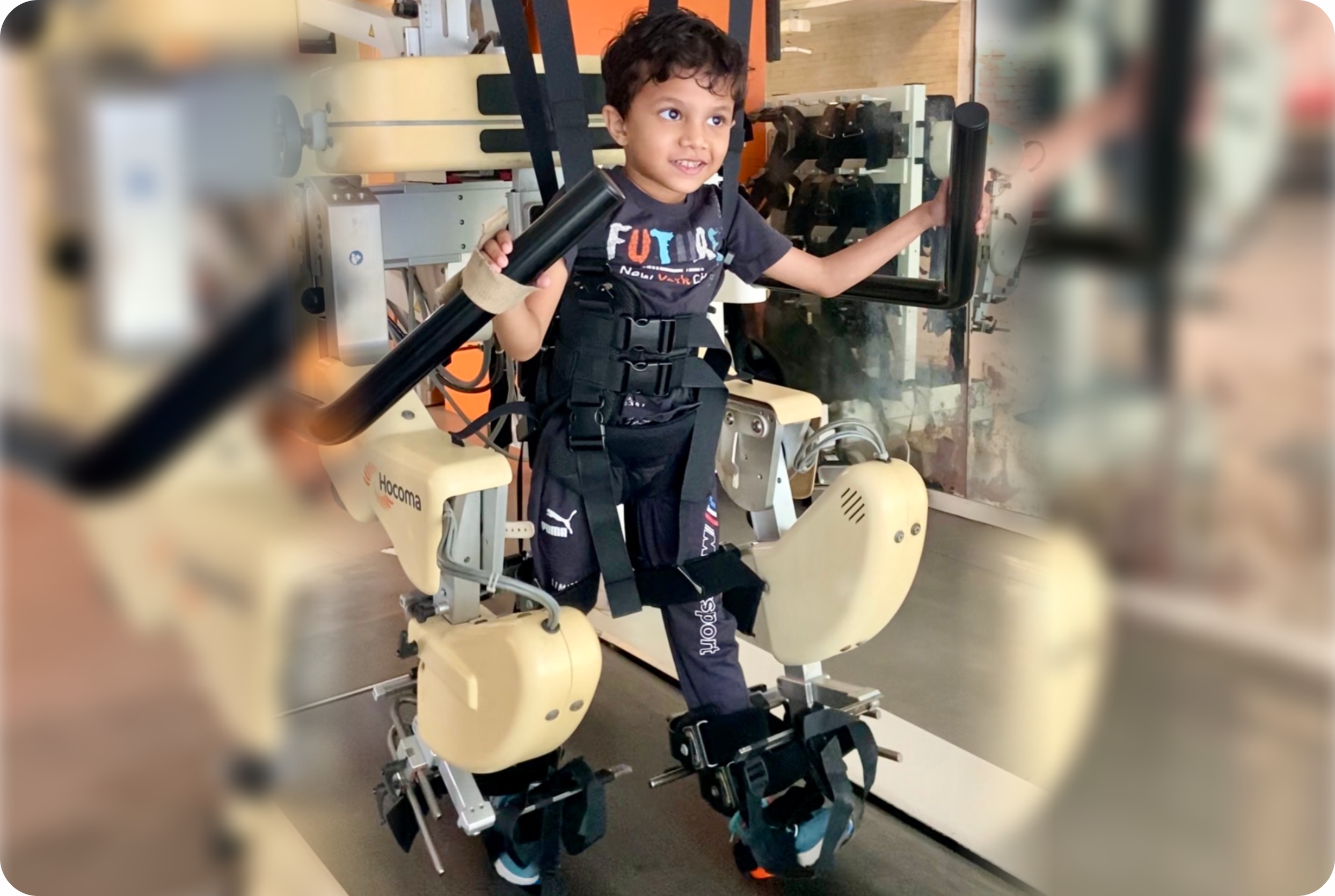
Every parent of a child with cerebral palsy has heard some version of the same sentence: “Let’s see how much progress we can make.” It’s said gently, but it often carries a quiet ceiling — an unspoken sense that some things may never fully change. At Mission Health, that ceiling is being pushed higher than ever before. With the introduction of the Paediatric Lokomat — India’s first Paediatric Legs and Walking Robot — children with cerebral palsy are getting a kind of therapy that simply did not exist in this country before.
The Problem With Treating a Small
Body Like a Small Adult
Cerebral palsy affects muscle control and movement from a very young age, and treating it has always come with a particular challenge: children are not just smaller versions of adult patients. Their bodies are still developing, their attention spans are shorter, their tolerance for repetitive, effortful movement is lower — and yet repetition is exactly what rewiring a young nervous system requires. For years, this meant physiotherapists doing something remarkable but fundamentally limited: manually guiding a child’s legs through walking patterns again and again, session after session, hoping the small, tiring body would cooperate long enough for the brain to learn. It worked, to a point. But a child’s patience runs out long before their potential does.
Enter the Paediatric Lokomat
The paediatric Lokomat changes the equation entirely. It is a robotic exoskeleton, sized and calibrated specifically for children, that supports a child’s body weight and drives precise, repeatable walking movements — the exact input a young nervous system needs to build (or rebuild) a walking pattern, delivered with a consistency no human hands could sustain for as long as a child actually needs it. This is not a smaller version of an adult machine bolted on as an afterthought. It is purpose-built for paediatric anatomy and paediatric therapy goals, which is precisely why Mission Health’s paediatric Ability Clinic centres its Neuro-rehabilitation programmes around it.
A Full Clinic, Not Just One Robot
The Paediatric Lokomat does not work alone. At Mission
Health, it sits alongside a full suite of technologies built for children:
• Paediatric
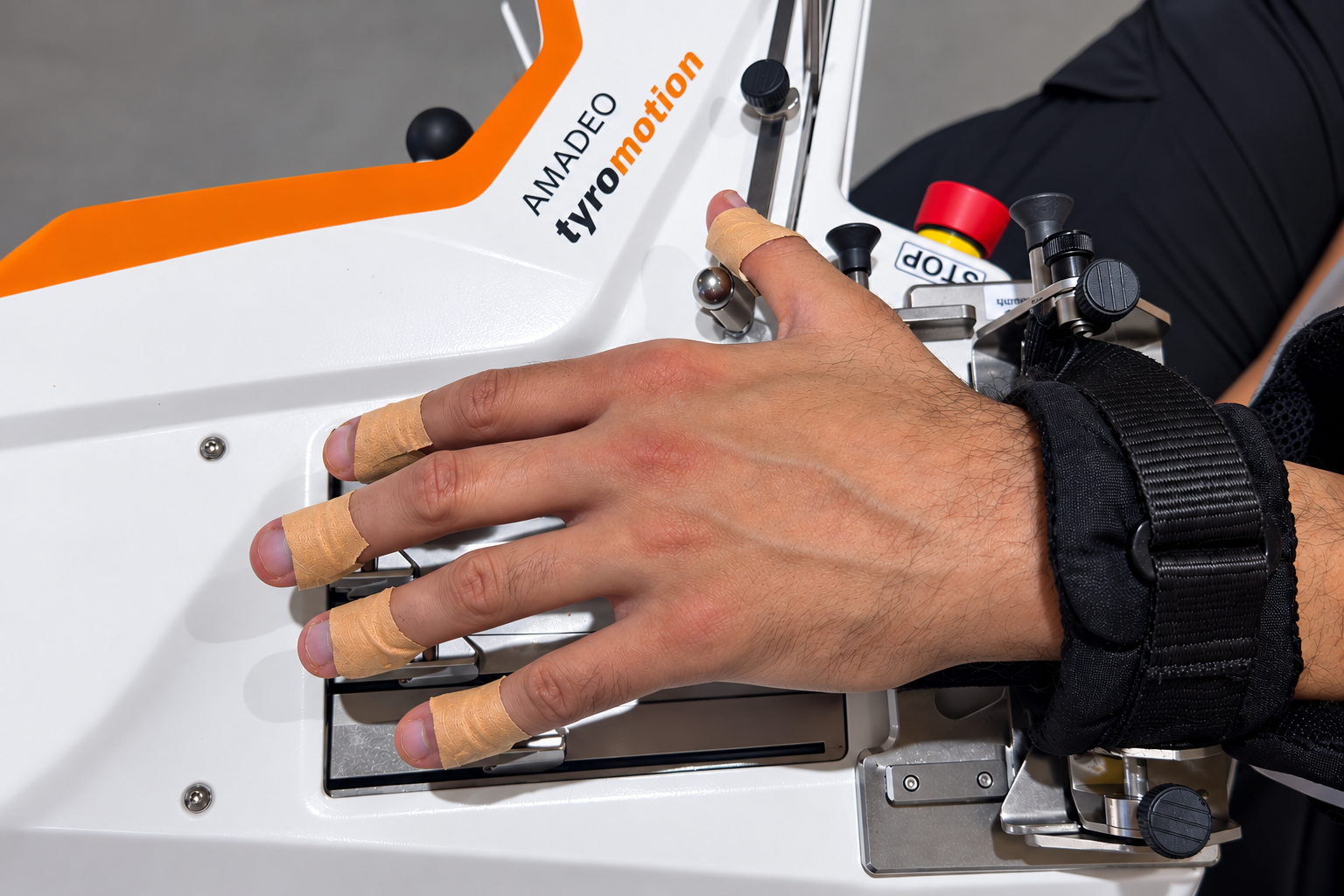
Shoulder, Arm, and Hand robots — for the fine motor skills that let a child hold a pencil, button a shirt, or grip a toy.
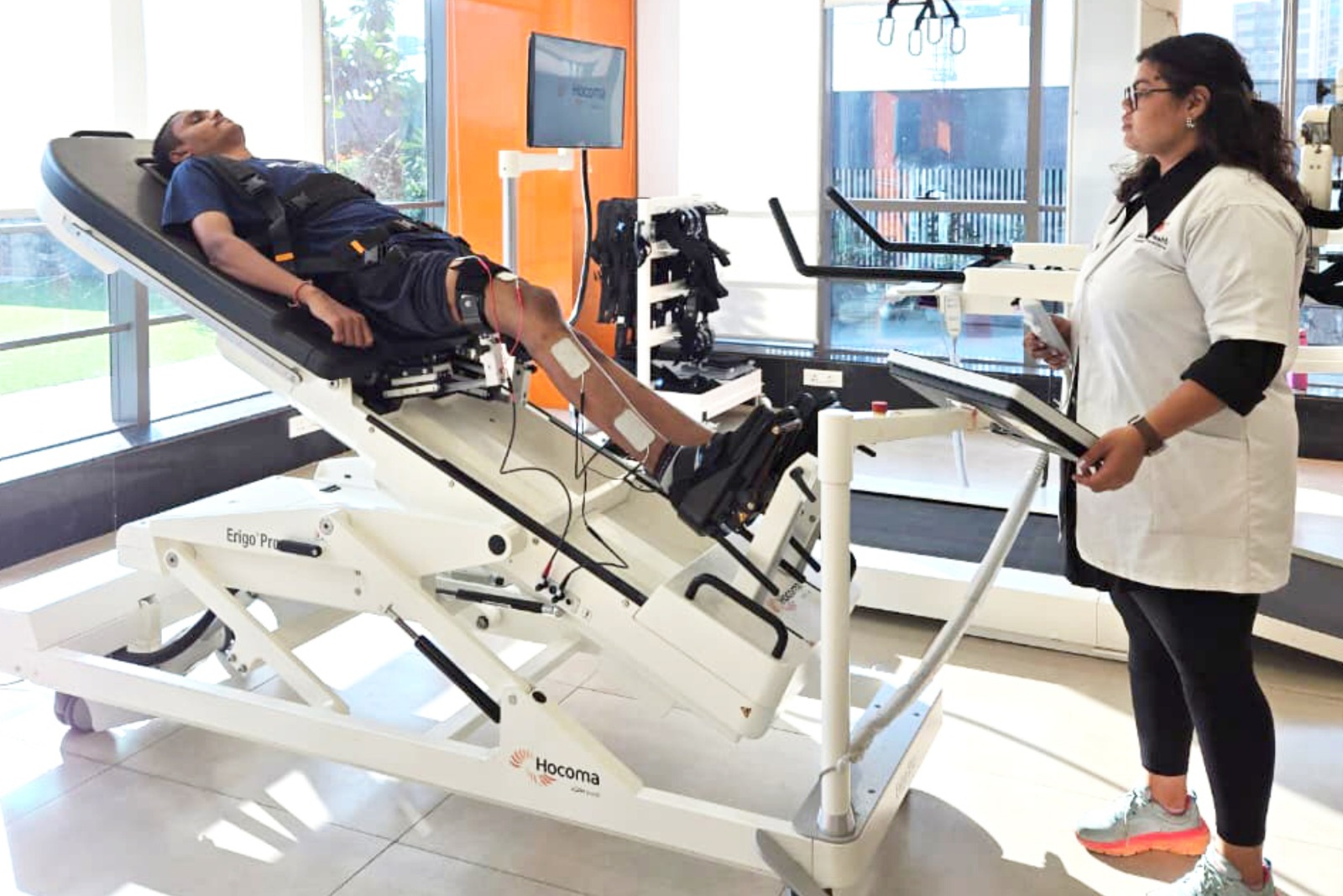
• EMG-Biofeedback — allowing therapists, and even the children themselves, to see in real time which muscles are firing and how hard.
• Functional Electrical Stimulation (FES) — activating muscles that have weakened from lack of use.
• Virtual Reality-based, game-based interactive rehabilitation — turning what could be dull, repetitive movement into an on-screen game the child’s own movements control, where every repetition becomes a level to beat rather than an exercise to endure, while quietly feeding the therapist real-time data on effort, range, and progress. That last point matters more than it might seem. Getting a child to do the same exercise 40 times is hard. Getting a child to do it 40 times because it is a game they want to win is a completely different equation — and it is often the difference between a therapy plan that works on paper and one that works in real life.
Why Starting Early Changes Everything
The nervous system’s ability to rewire itself — neuroplasticity — is at its most responsive during childhood. This is precisely why early, intensive, well-targeted intervention has such an outsized impact on long-term outcomes for children with cerebral palsy.
Robotics does not replace the expertise of a paediatric Neuro-physiotherapist — it gives them a tool capable of matching the intensity that a developing brain can actually respond to. The therapist still designs the programme, reads the child’s progress, and decides where the goalposts should move next. The robot simply makes it possible to deliver that programme at a scale that small human muscles and shorter attention spans could never sustain on their own.
What This Means for Families
For a parent watching their child struggle to stand, hold a spoon, or take a step without support, “how much progress can we make” stops being a hedge and starts being an honest, hopeful question — one with a much bigger answer than it used to have. At Mission Health’s Paediatric Ability Clinic, cerebral palsy is not treated as a ceiling. It is treated as a starting point.

.
 Dr. Janardan Mishra


 Dr. Richa Ojha
 Dr. Bansari Patel
 Dr. Aalap Shah