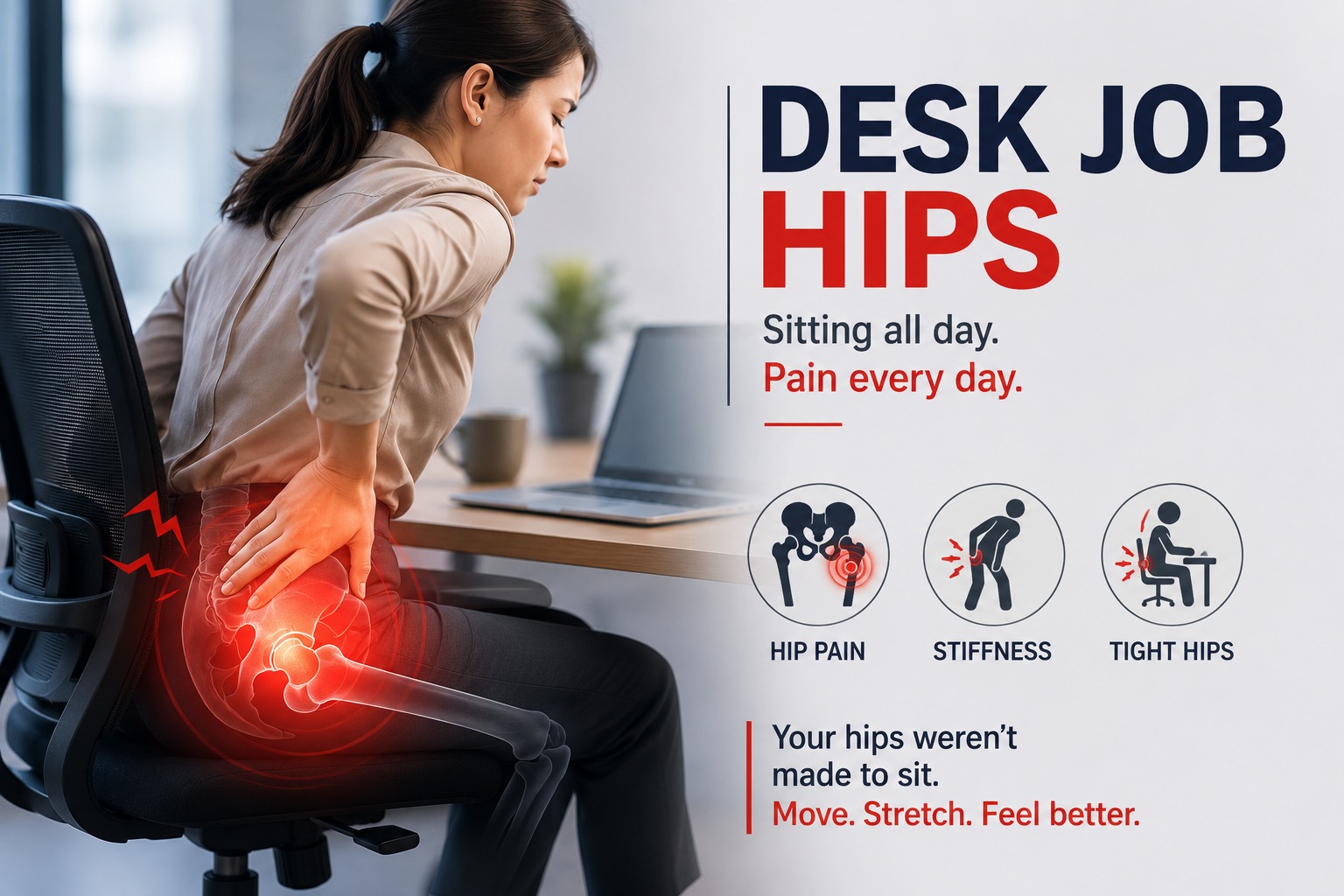
Are We Creating A Generation With Weak Backs And Stiff Hips? The Hidden Cost of Modern Living
 By Dr. Bansari Patel
 13 Jun, 2026
  By Dr. Bansari Patel
13 Jun, 2026
By Dr. Bansari Patel
13 Jun, 2026
For the first time in human history, people are sitting more than they are moving.
We sit while working.
We sit while travelling.
We sit while eating.
We sit for hours while watching the series.
We even sit while socializing.
The average adult now spends anywhere between 8 to 12 hours a day sitting.
The problem?
The human body was never designed for this.
As physiotherapists, we're seeing a worrying trend. Young adults in their 20s and 30s are developing problems that were once commonly seen in much older populations—persistent back pain, stiff hips, poor posture, reduced mobility, and recurring injuries.
This raises an important question:
Are we creating a generation with weak backs and stiff hips?
The human body is incredibly intelligent. It adapts to the demands placed upon it.
If you regularly exercise, your body becomes stronger. If you regularly walk, your endurance improves.
But if you spend most of your day sitting, your body adapts to sitting too.
Unfortunately, those adaptations aren't always beneficial.
The Root Cause: Sitting
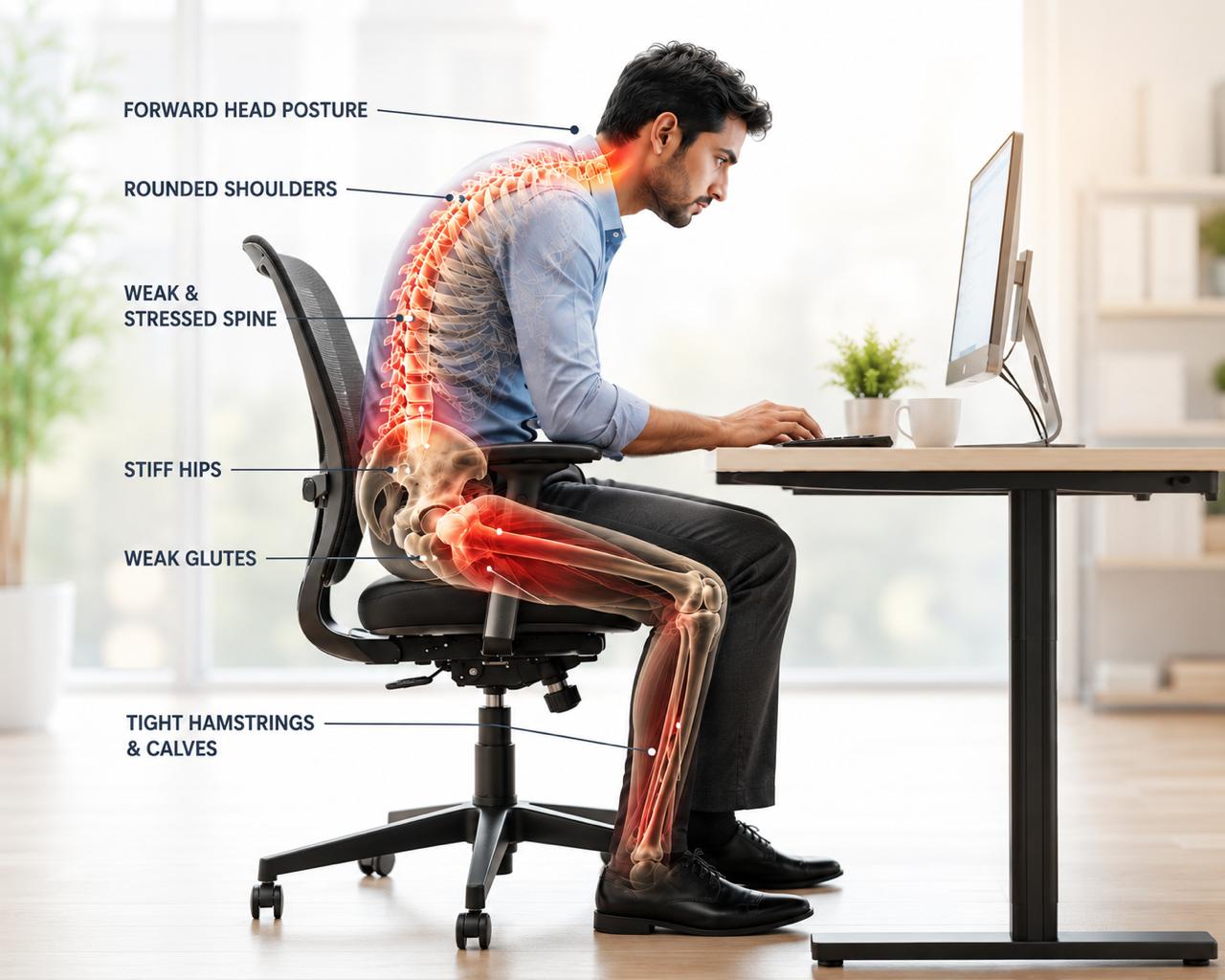
When you sit for hours, your body operates in a continuous forward-bend state.
● Adaptive Shortening: Your hip flexors stay in a shortened position and eventually become rigid, restricting your overall range of motion.
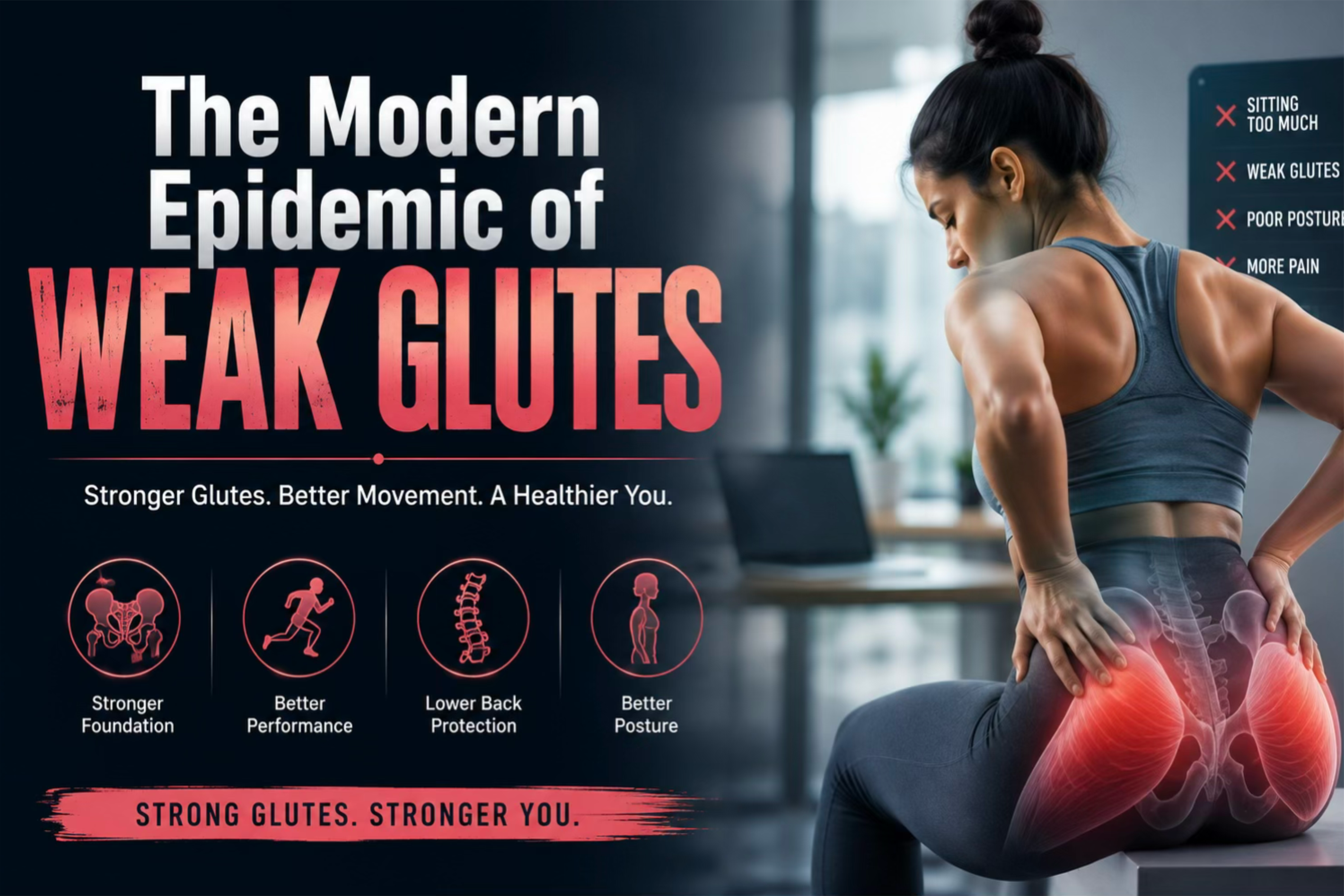
● Glute Amnesia: Tight hip flexors inhibit your gluteus maximus, leading to inactive and weak glutes.
● Spinal Compensation: Because the hips and glutes are too weak to stabilize your pelvis, your lower back is forced to take on the extra load, leading to stiffness and weakness in the spine.
Most people associate hip stiffness with discomfort while sitting cross-legged or bending down. But the hips play a much bigger role than that.
The hips are the bridge between the upper and lower body. Every time you walk, climb stairs, squat, run, lift, or even stand, your hips are involved.
When the hips lose mobility:
● The lower back is forced to move more
● The knees experience greater stress
● Balance becomes less efficient
● Walking mechanics change
As a result, many cases of lower back pain actually begin with restricted hip mobility.
Back pain is now one of the leading causes of disability worldwide. While many factors contribute, one major reason is simple:
We move less than previous generations.
Hours spent sitting can lead to:
● Reduced spinal mobility
● Poor posture habits
● Weak stabilizing muscles
● Increased mechanical stress on spinal structures
The body thrives on movement.
When movement decreases, problems often begin to appear.
Breaking the Cycle:- What Can You Do?
Stretching alone is often insufficient and can sometimes exacerbate back issues if done improperly. The most effective path forward combines strengthening the core and hips with focused flexibility routines.
● Movement Breaks: Introduce regular micro-breaks into your workday by using a standing desk or walking around for 5–10 minutes every hour.
● Targeted Strengthening: Focus on exercises like squats, glute bridges, and dead bugs, which engage both the core stabilizers and hip muscles simultaneously.
● Stretch tight hip muscles:- relieves joint stiffness, alleviates lower back pain, and restores your natural range of motion
● Spend less recreational time sitting
● Maintain consistency
Weak backs and stiff hips aren't inevitable consequences of aging.They're often consequences of inactivity.
The body you have tomorrow is largely shaped by the movements you choose today.
So ask yourself:
How many hours did you sit today?
And more importantly;
How many times did you move?
.
 Dr. Janardan Mishra
 Dr. Richa Ojha
 Dr. Disha Shah

 Dr. Aalap Shah