Frozen Shoulder or Rotator Cuff Tear? The Mix-Up That Delays Real Recovery
 By Dr. Bansari Patel
 23 Jul, 2026
  By Dr. Bansari Patel
23 Jul, 2026
By Dr. Bansari Patel
23 Jul, 2026
You reach up to grab something from
a shelf and your shoulder screams. Sleeping on that side is no longer an
option. Someone tells you, "It's probably just a frozen shoulder — give it
time." But what if it isn't?
Frozen shoulder and a torn rotator
cuff are two of the most common causes of shoulder pain, and they're also two
of the most commonly confused. They can feel almost identical, but they're
different injuries that call for different treatment. Mixing them up is one of
the biggest reasons shoulder pain drags on for months instead of weeks.
What's Actually Different
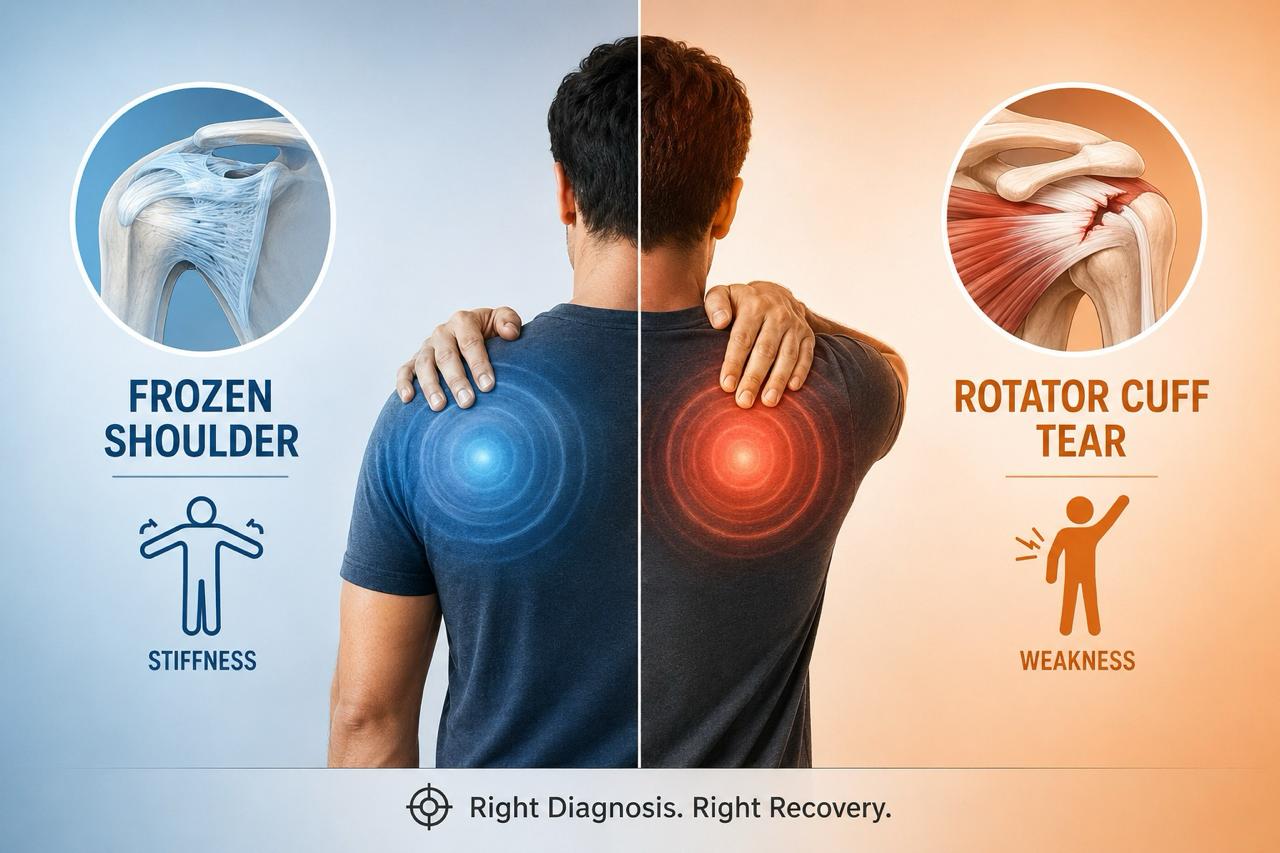
Frozen shoulder is a stiffness
problem. The tissue around the joint tightens, and movement becomes difficult
in every direction — reaching up, reaching back, reaching out, all equally
hard.
Rotator cuff tear is a structural
problem. A tendon that helps move and stabilize the shoulder is damaged or
torn, causing pain and weakness with specific movements — especially lifting
the arm overhead — while other movements may feel comparatively fine.
Same result on the surface — a
painful, limited shoulder. Different cause underneath. Different fix.
How the Two Are Actually Told Apart
A careful hands-on assessment
usually settles the question. A physiotherapist looks at how the pain started
and how long it's been going on, then checks something simple but telling: how
far the shoulder moves when the patient tries to lift it themselves, versus how
far it moves when the physiotherapist gently guides it through the same motion.
Specific strength tests for individual muscles, and a proper look at any
existing scans or reports, round out the picture.
If movement is equally restricted in
every direction, both on your own and with help, that points toward frozen
shoulder. If someone else can move your arm noticeably further than you can
move it yourself, and specific muscles test weak, that usually points toward a
rotator cuff tear. It's this comparison — not symptoms alone — that separates
one from the other.
Why the Treatment Has to Match the Actual Problem
Once it's clear which one you're
dealing with, the treatment path looks quite different.
A stiff, frozen shoulder responds to
gradual, progressive stretching and joint mobilization that slowly restores
movement without provoking a flare-up. A torn rotator cuff needs the opposite
instinct in some ways — protecting the damaged tendon first, then carefully
rebuilding strength around it, sometimes through physiotherapy alone and
sometimes alongside surgical repair for more significant tears.
Push a torn tendon through the wrong
kind of stretching, and it can get worse. Treat a frozen shoulder too
cautiously, and it stays stiff longer than it needs to. The diagnosis isn't a
formality — it's what decides which direction treatment should even move in.
The Mission Health Approach
At Mission Health, every shoulder
case starts with this same careful process — a detailed hands-on assessment and
comparison of movement, strength, and imaging, before any treatment plan is
decided. Once the diagnosis is clear, treatment combines advanced technologies
like ATRT and Hiro TT laser therapy, which support the body's own
tissue-healing process and help ease pain and inflammation, with hands-on
manual therapy that rebuilds strength and restores proper movement in the
shoulder muscles. The technology speeds up healing at the tissue level; the
hands-on work makes sure the shoulder comes back strong, not just pain-free.
The Bottom Line
If shoulder pain has been labelled
without a proper hands-on examination, it's worth asking a few more questions
before settling into months of the wrong treatment. Frozen shoulder and rotator
cuff tears can look the same from the outside — but getting the diagnosis right
is what actually decides how quickly, and how completely, you recover.

.
 Dr. Janardan Mishra




 Dr. Richa Ojha
 Dr. Disha Shah


 Dr. Aalap Shah