Why Can I Stand for 20 Minutes but Can't Walk for 10?
 By Dr. Bansari Patel
 15 Jul, 2026
  By Dr. Bansari Patel
15 Jul, 2026
By Dr. Bansari Patel
15 Jul, 2026
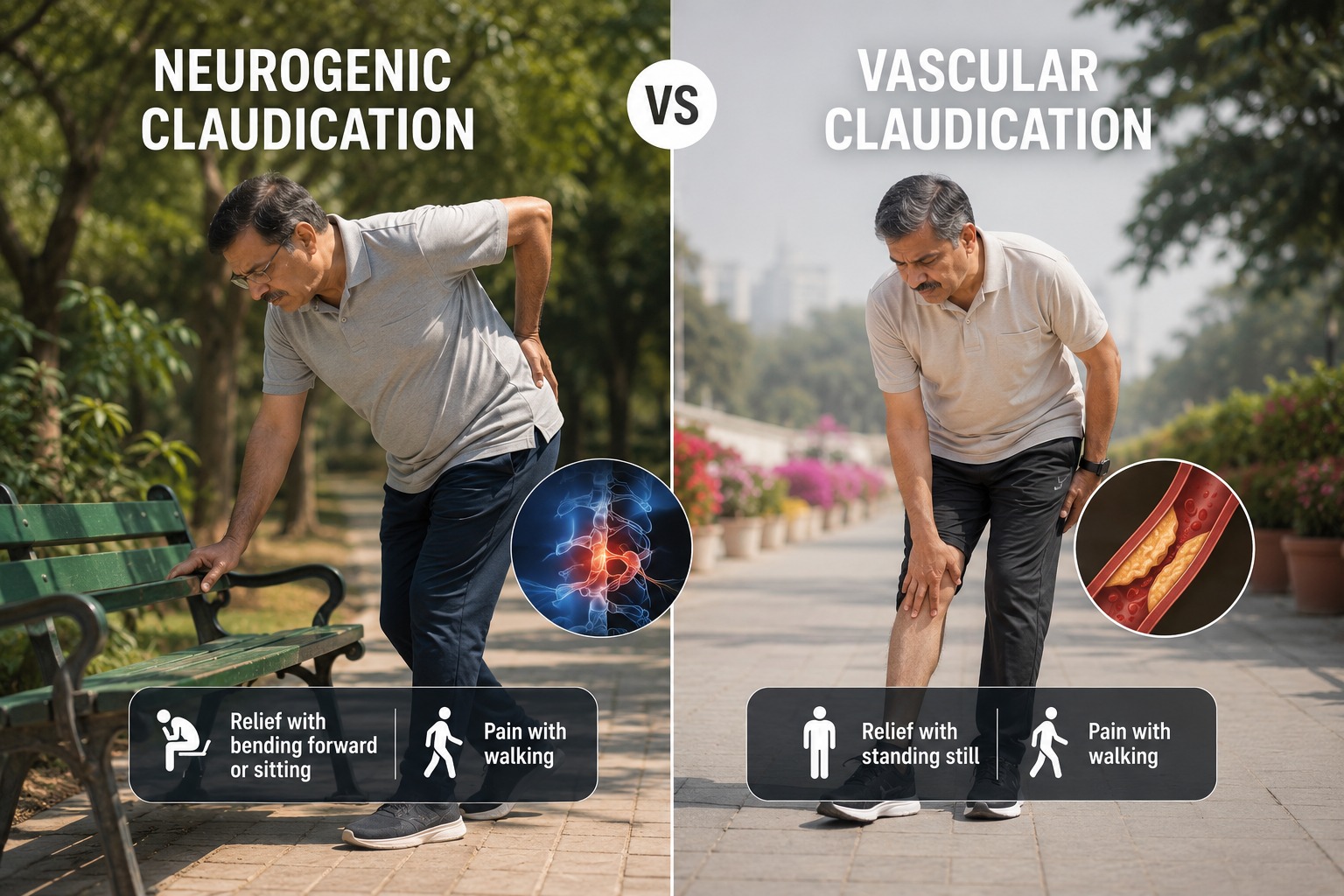
Neurogenic vs. Vascular Claudication
— Which One Is Behind Your Leg Pain?
If this sounds familiar, you're not
alone. Many people find they can stand comfortably for a long time, but walking
even a short distance brings on cramping, pain, or numbness in the legs —
forcing them to stop and rest. This condition is called claudication,
and it's more common than most people realize.
Here's the part that surprises most
patients: claudication isn't always about blood circulation. In fact, it can
come from two completely different places in the body — your blood vessels
or your spine. And since the two need entirely different treatments,
figuring out which one is behind your pain makes all the difference.
What Exactly Is Claudication?
Claudication is pain, cramping, or
heaviness in the legs that comes on after walking a certain distance and eases
with rest. Left unaddressed, that "safe walking distance" tends to
get shorter over time — sometimes down to just a few steps.
There are two types: vascular
claudication and neurogenic claudication.
Vascular Claudication: When It's
About Blood Flow
This happens when the arteries
carrying blood to your legs harden and narrow over time. While resting, blood
flow may be just enough — but the moment you start walking, your leg muscles
demand more blood than the narrowed artery can supply. The result is tight,
cramping pain that fades fairly quickly once you simply stand still.
In more advanced cases, you might
also notice cold feet, skin discoloration, or slow-healing wounds on the legs.
Neurogenic Claudication: When It's
About the Spine
This is the classic sign of lumbar
canal stenosis — narrowing of the space around the spinal nerves in your
lower back, often due to a disc bulge, which presses on the nerves running down
to your legs. It shows up as pain, cramping, or numbness in the thighs,
buttocks, and calves while walking.
Here's the key difference: standing
still alone often doesn't help much. What actually brings relief is bending
forward or sitting down — which is why many people with this condition find
themselves instinctively leaning on a shopping cart or park bench.
A Quick Way to Tell Them Apart
|
Sign |
Vascular Claudication |
Neurogenic Claudication |
|
Pain type |
Cramps, tightness |
Cramps, numbness |
|
Walking distance |
Fairly fixed each time |
Varies day to day |
|
Relief on stopping |
Almost immediate |
Takes a little longer |
|
What actually helps |
Standing still |
Bending
forward or sitting |
|
Affected by posture |
Rarely |
Often |
|
Back pain |
Uncommon |
Fairly common |
|
Pulses in the foot |
Weak Absent |
Normal |
|
Pain while cycling |
Yes |
No
|
One simple test worth remembering:
if you can comfortably pedal a bicycle but can't walk without pain, the issue
is more likely coming from your spine than your circulation — cycling keeps
your back gently bent forward, which takes pressure off the nerves.
Why an Accurate Diagnosis Matters
A proper diagnosis usually involves
a detailed clinical evaluation, along with an MRI of the lumbar spine to check
the nerves and a Doppler or venous study to check circulation. Since vascular
and neurogenic claudication need very different treatments, pinpointing the
right one from the start saves you time, money, and unnecessary tests.
Treating Neurogenic Claudication:
The Mission Health Approach
Rather than simply managing the
pain, treatment at Mission Health focuses on addressing the root cause — the
disc bulge pressing on the nerve. This includes:
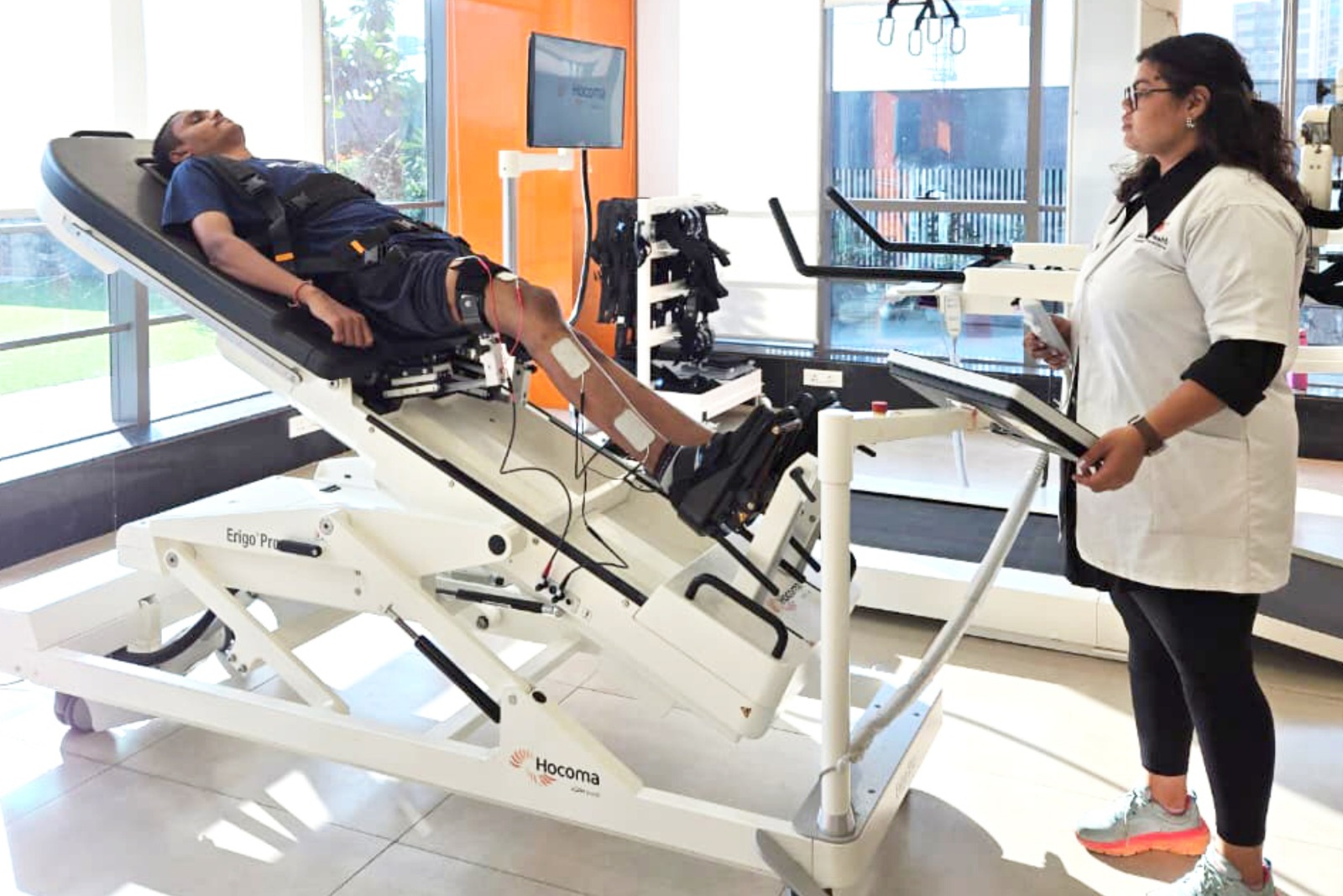
● Disc Reversal Program – to reverse the disc bulge and
take pressure off the compressed nerve root by non- surgical advanced spinal decompression
therapy
● Theal Therapy – to help reactivate the affected
nerve cells
● Core Stability Exercises – to strengthen the muscles that
support the spine
● Ergonomic Correction – to prevent the problem from
coming back
Treating Vascular Claudication
For circulation-related
claudication, treatment typically includes EECP, guided exercise and lower-limb
strengthening, collateral circulation development, vascular rehabilitation, and
managing risk factors like high cholesterol, high blood pressure, and smoking.
The Takeaway
If you find yourself able to stand
for a while but struggle to walk even a fraction of that time without pain,
don't assume it's automatically a circulation issue. The real cause could be
sitting quietly in your spine — and identifying it correctly is the first step
toward walking freely again.
.
 Dr. Janardan Mishra
 Dr. Richa Ojha
 Dr. Disha Shah
 Dr. Aalap Shah