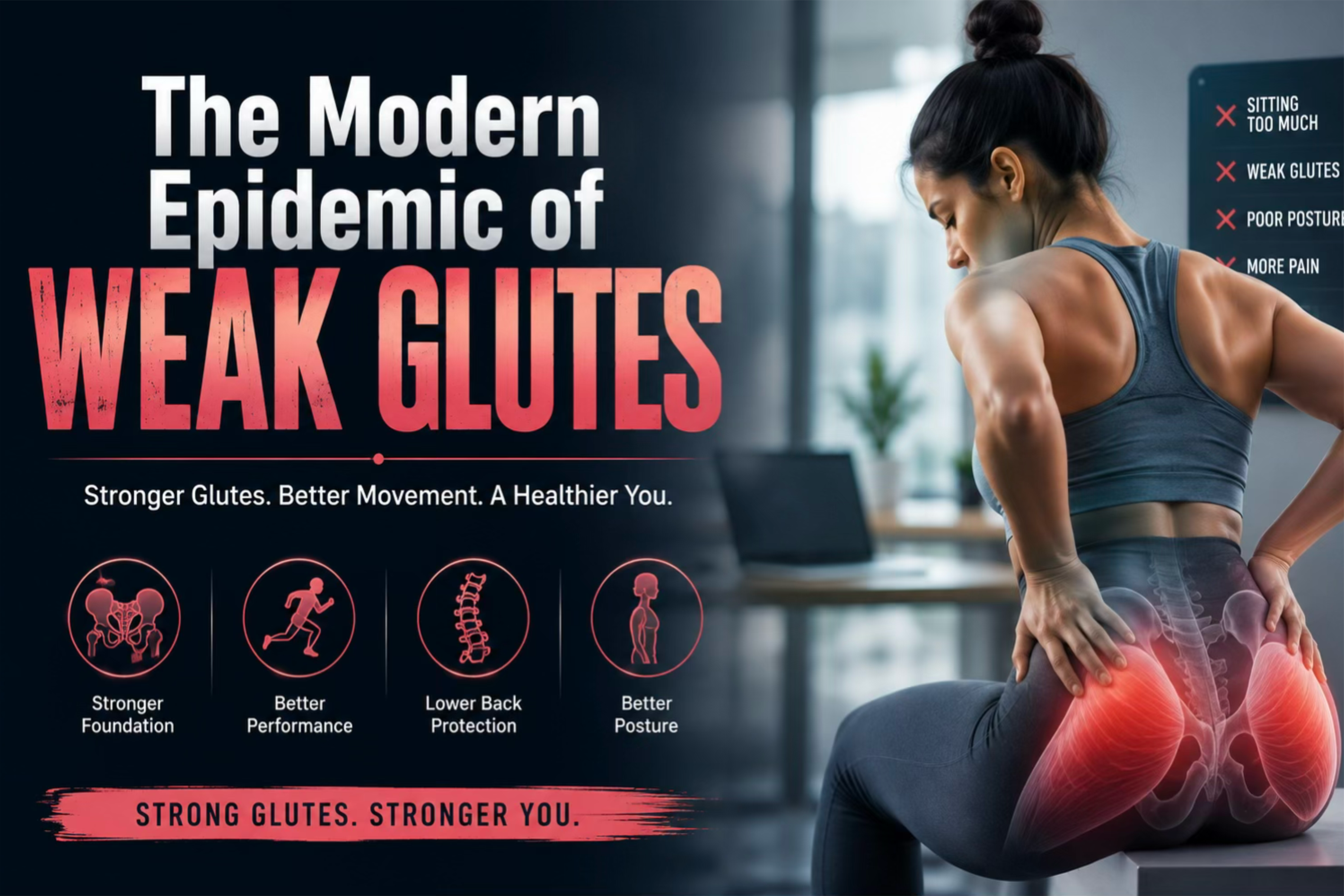
The Modern Epidemic of Weak Glutes
 By Dr. Bansari Patel
 24 Aug, 2026
  By Dr. Bansari Patel
24 Aug, 2026
By Dr. Bansari Patel
24 Aug, 2026
Your glutes are the largest and strongest muscles in your body.
They aren't just there for appearance—they're the powerhouse behind almost every movement you make.
Every time you walk, climb stairs, stand up from a chair, run, jump, or lift something, your glutes are designed to generate power, stabilize your pelvis, and protect your hips and lower back.
But modern lifestyles have created a problem our bodies were never designed for.
We sit.
For hours at work.
During our commute.
While scrolling reels.
And over time, prolonged sitting causes the glute muscles to become less active—a phenomenon commonly known as Glute Inhibition or "Dead Butt Syndrome."
Your glutes don't suddenly become weak overnight.
They simply stop being used the way they were meant to.
Why Strong Glutes Matter
Healthy glutes do much more than help you walk.
When your glutes aren't doing their job, other muscles begin compensating.
The lower back works harder. The hips become overloaded. The knees absorb forces they weren't designed to handle.
And gradually, movement becomes less efficient.
Signs Your Glutes May Be Weak
Weak glutes often don't announce themselves with glute pain.
Instead, your body sends other signals.
You may notice:
Many people spend months treating these symptoms without ever addressing the real problem.
How Physiotherapy Helps
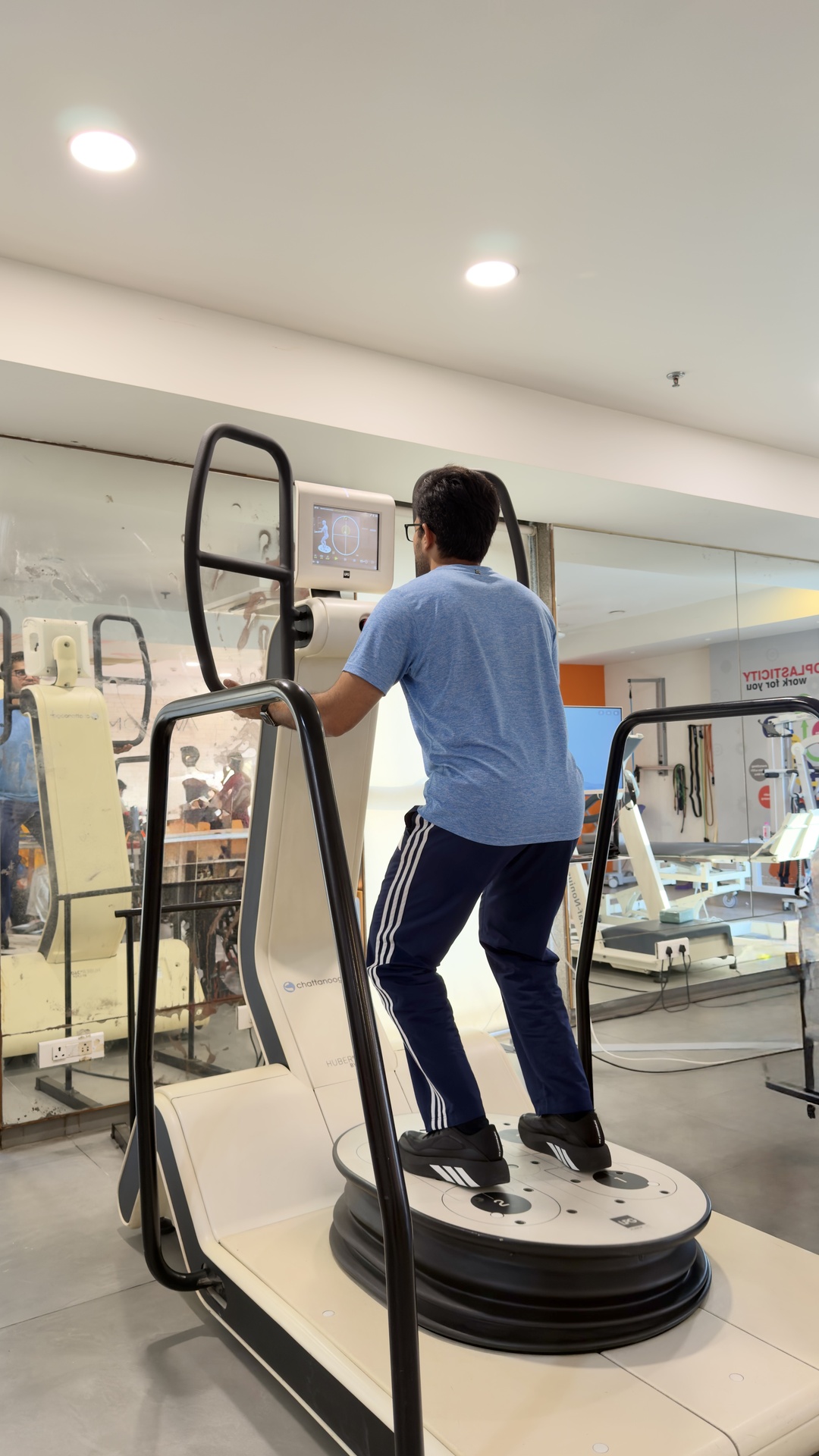
Strengthening the glutes isn't the ultimate solution; We need to identify why they've stopped functioning properly.
A detailed movement assessment helps us understand how your hips, pelvis, spine, and lower limbs work together.
From there, rehabilitation focuses on:
The goal isn't simply to build stronger muscles.
It's to restore the way your body was designed to move.
What Can You Do?
The good news is that glute inhibition is often reversible.
Small daily habits can make a remarkable difference.
Because your glutes only become stronger when you use them.
Final Thoughts
Weak glutes aren't simply a fitness problem.They're becoming a modern lifestyle problem.
The more we sit, the less our body's most powerful muscles are allowed to do the job they were designed for.
Strong glutes don't just improve performance; they help protect your hips, support your spine, improve your posture, and make everyday movement easier.
So the next time your lower back aches or your knees begin to complain, don't just ask where the pain is.
Ask whether your glutes are doing their job.
Because sometimes, the strongest solution begins with the strongest muscle in your body.
 Dr. Disha Shah
 Dr. Aalap Shah
 Dr. Janardan Mishra
 Dr. Richa Ojha