From Finger Movement to Everyday Function: The Role of AMADEO® in Neurorehabilitation
 By Dr. Disha Shah
 04 Sep, 2026
  By Dr. Disha Shah
04 Sep, 2026
By Dr. Disha Shah
04 Sep, 2026
Sometimes, recovery begins with something incredibly small.
One finger moving.
A hand opening.
A patient holding a cup again.
After a stroke, brain injury, spinal cord injury or another neurological condition, movements that once happened without thought can suddenly become difficult.
Opening the hand. Moving a finger. Holding a spoon. Picking up a glass. Writing. Using a phone.
These may seem like small tasks.
For someone in neurorehabilitation, they can be major milestones.
And this is where advanced technology can become an important part of the rehabilitation journey.
What is AMADEO®?
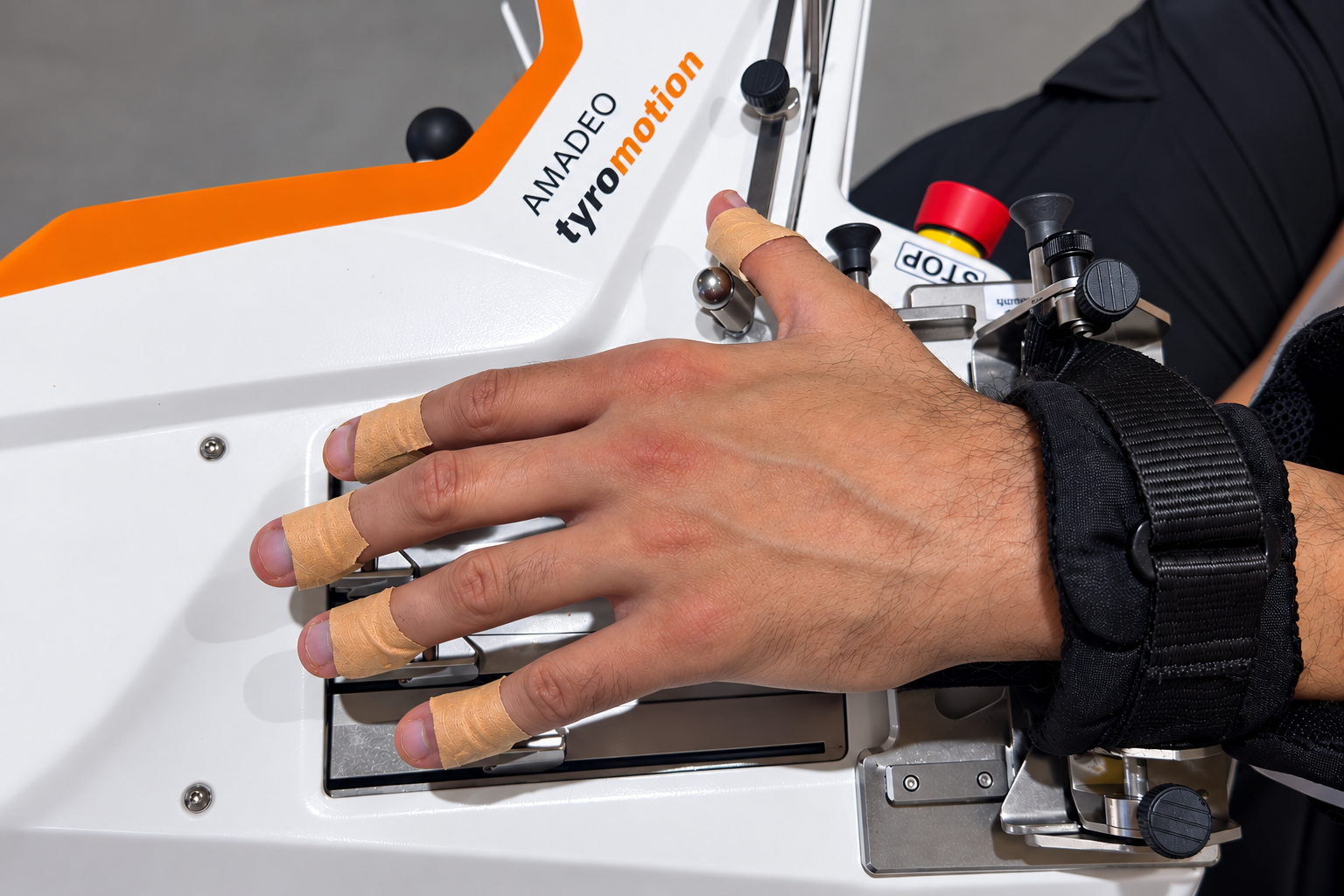
AMADEO® is a robotic finger-hand rehabilitation system designed to train hand and finger movement in patients with neurological impairments.
It allows therapists to work on individual finger movements and hand function through different training modes:
This allows therapy to be adjusted according to the patient's current motor ability and rehabilitation goals.
Why Do Small Movements Matter So Much?
Neurorehabilitation is rarely about one big movement.
It is about repetition, practice and meaningful movement.
A patient may begin with difficulty moving a single finger.
With structured rehabilitation, that movement can become part of a larger functional goal.
Finger movement → Hand control → Grasp → Object handling → Everyday function
It could mean:
Because ultimately, patients don't come to rehabilitation simply to move their fingers.
The Power of Repetition in Neurorehabilitation
Recovery after neurological injury takes more than simply understanding a movement.
The nervous system needs opportunities to practice movement repeatedly.
AMADEO® is designed to facilitate intensive, repetitive finger and hand training. It is reported that, depending on the therapy programme and patient, the system can facilitate up to 700 repetitions in a session.
That intensity can be valuable because every repetition provides another opportunity to practice a movement.
Visual Biofeedback: See the Movement as You Train
AMADEO® also incorporates a visual biofeedback screen that allows patients to see their movement and performance during therapy.
As the patient performs finger or hand movements, the screen provides real-time visual feedback, helping them understand whether and how they are moving.
This makes rehabilitation more interactive, measurable and engaging. Instead of simply performing a movement, the patient can see their performance and actively participate in the training process.
Movement → Visual Feedback → Active Participation → Repeated Practice
So AMADEO® isn't just about mechanically moving the fingers. It combines robot-assisted movement, intensive repetition and visual biofeedback to create a more structured and engaging hand rehabilitation experience.
AMADEO® at Mission Health
At Mission Health, advanced robotic neurorehabilitation has been part of our journey for nearly a decade.
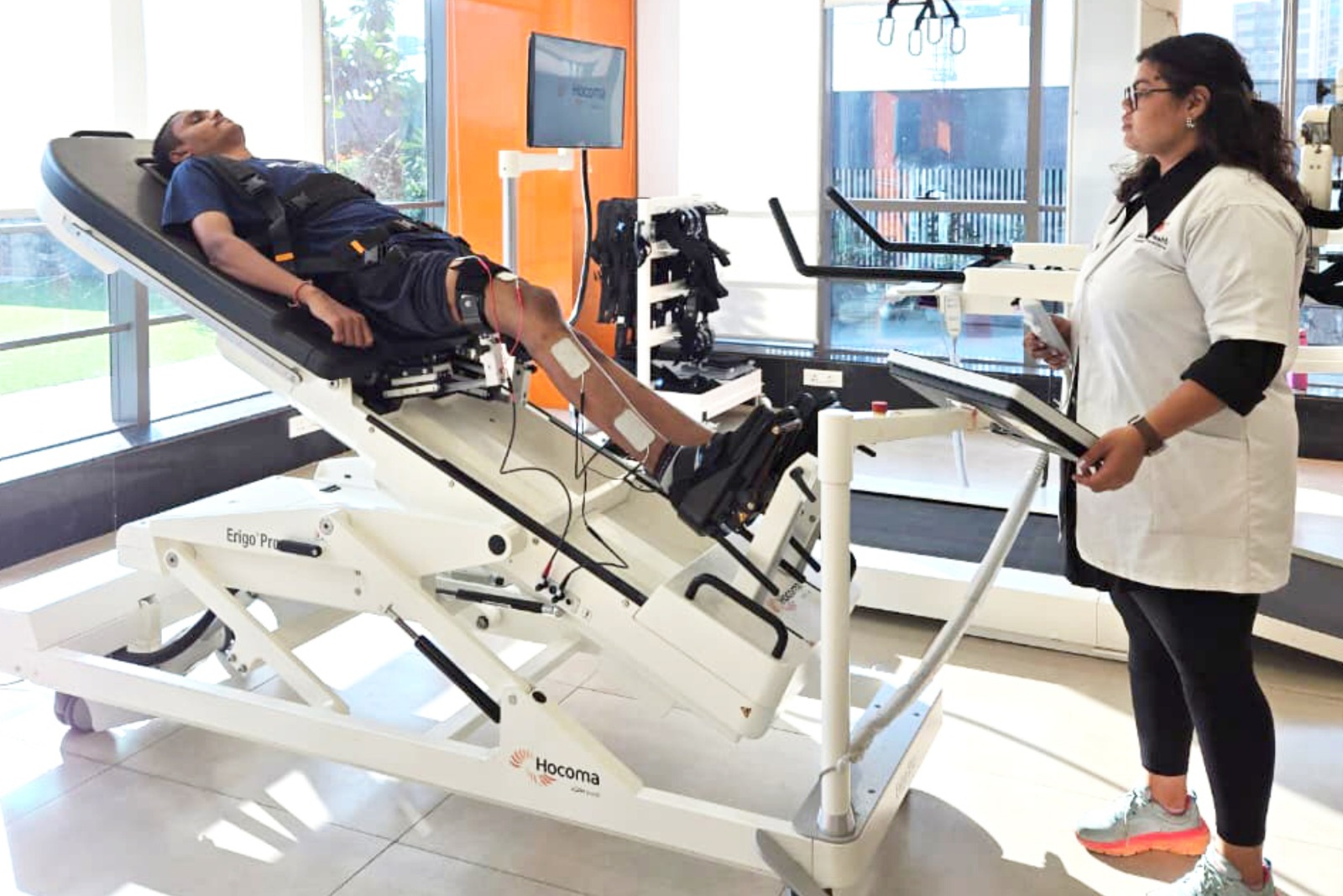
Over the years, technologies such as AMADEO® have become part of our advanced neurorehabilitation ecosystem, alongside robotic and technology-assisted solutions for gait, upper-limb and other aspects of movement rehabilitation.
But our approach has never been about adding technology simply because it is advanced.
It is about asking a more important question:
The answer is different for every individual.
From Movement to Independence
AMADEO® is not a replacement for the therapist or the rehabilitation process.
It is an advanced tool that can support intensive, measurable and individualized hand and finger training within a broader neurorehabilitation programme.
Because rehabilitation is not about technology alone.
It is about bringing together:
Advanced technology + clinical expertise + intensive practice + patient effort to work towards meaningful functional goals.
At Mission Health, the focus remains bigger than the device.
Because when a hand begins to move, a person can begin to do more.
.
 Dr. Janardan Mishra
 Dr. Richa Ojha
 Dr. Bansari Patel
 Dr. Aalap Shah