Carpal Tunnel Syndrome vs De Quervain’s Tenosynovitis: Similar Wrist Pain, Different Problems
 By Dr. Aalap Shah
 15 Oct, 2026
 By Dr. Aalap Shah
15 Oct, 2026
These symptoms may seem similar, but they do not always have the same cause.
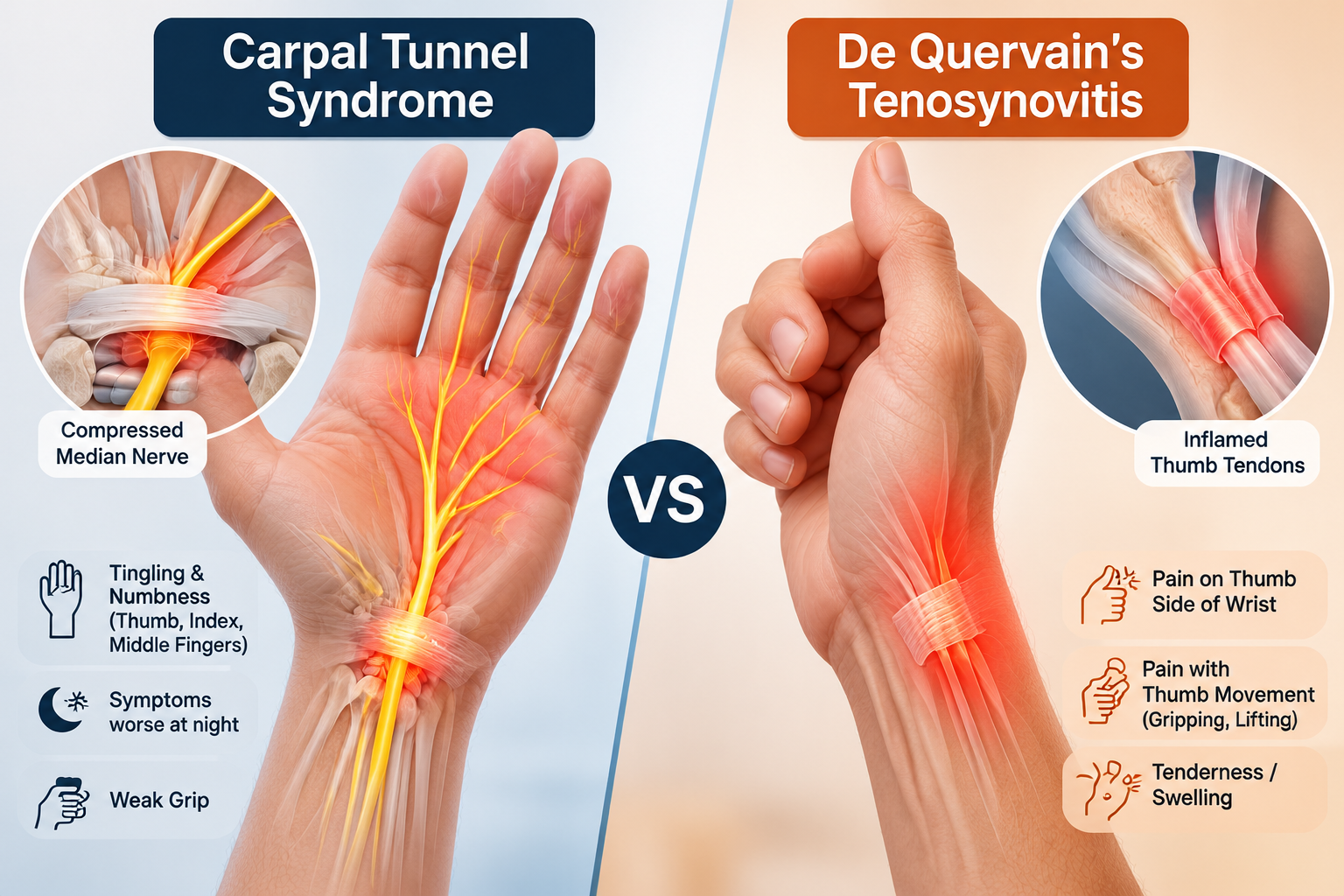
Two conditions that are often confused are Carpal Tunnel Syndrome (CTS) and De Quervain’s Tenosynovitis (DQ syndrome). Both can affect hand function and interfere with everyday activities. However, they involve different anatomical structures, produce different symptom patterns, and require different treatment approaches.
Understanding the difference is the first step towards accurate diagnosis and effective rehabilitation.
Carpal Tunnel Syndrome is a nerve-compression condition that develops when the median nerve is compressed as it passes through the carpal tunnel in the wrist.
When pressure affects this nerve, symptoms can extend beyond local wrist pain.
Activities involving sustained wrist positions or repetitive hand use may aggravate symptoms in some people. However, CTS can have multiple contributing factors, and symptoms should not automatically be attributed to computer use alone.
Common symptoms of Carpal Tunnel Syndrome include:
De Quervain’s Tenosynovitis is a painful condition affecting the tendons and their surrounding sheath on the thumb side of the wrist.
Unlike Carpal Tunnel Syndrome, De Quervain’s is primarily a tendon-related problem rather than compression of the median nerve.
Common symptoms of De Quervain’s Tenosynovitis include:
Repeated gripping, lifting, and thumb movements may contribute to symptom aggravation. The condition can occur in people with a range of occupational and everyday activity demands, including some people during pregnancy or after childbirth.
Although both conditions can cause wrist discomfort and difficulty using the hand, their underlying mechanisms are different.
Accurate differential diagnosis starts with understanding the patient's symptoms rather than simply identifying where the pain occurs.
A clinical assessment may include:
The goal is to distinguish nerve-related symptoms from tendon-related pain while also considering other possible causes, including thumb-base arthritis, wrist joint conditions, and cervical nerve problems.
Hand and wrist pain can make even familiar activities unexpectedly difficult. But similar symptoms do not always indicate the same condition.
At Mission Health, an assessment-led approach to physiotherapy and rehabilitation focuses on understanding the source of symptoms, identifying functional limitations, and developing an individualised management plan.
If wrist pain, tingling, numbness, or thumb movement becomes difficult or persistent, do not rely on guesswork or self-diagnosis. Seek a professional assessment to understand the cause and identify the most appropriate treatment.
The objective is not simply to reduce discomfort. It is to help people regain useful hand function and return to daily activities as safely as possible.
At Mission Health, the first step towards better movement is understanding what is actually causing the problem.


 Dr. Disha Shah
 Dr. Bansari Patel
 Dr. Janardan Mishra

 Dr. Richa Ojha