Sciatica, or Leg Pain That Only Looks Like It?
 By Dr. Aalap Shah
 05 Nov, 2026
 By Dr. Aalap Shah
05 Nov, 2026
Why finding the true source of your pain matters more than chasing the pain itself
“Doctor, my sciatica is back.”
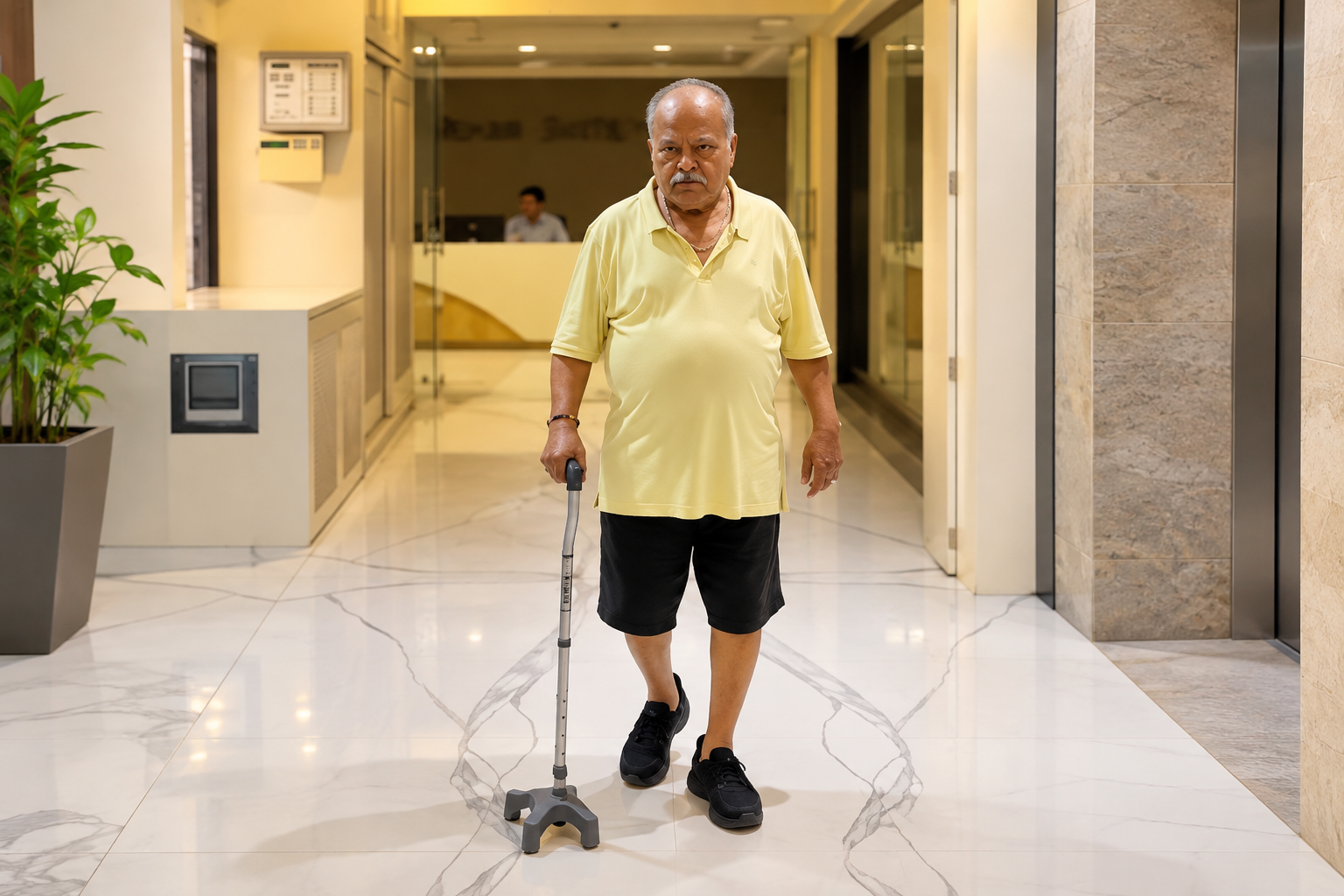
We hear this often at Mission Health. The pain starts in the lower back, travels through the buttock and down the leg. Some people feel tingling in the foot, others a heaviness while walking. Sitting through a meeting becomes a struggle, and getting out of bed in the morning feels stiff.
Here is what most people are never told: not every leg pain is sciatica, and not every sciatica has the same cause.
Sciatica is not a diagnosis in itself. It is a symptom: the sign that the sciatic nerve, or the nerve roots that form it in the lower spine, is irritated or compressed.
The cause behind it can vary:
Two people can have the same leg pain and need very different treatment. If the leg is treated while the real problem sits in the spine, relief is temporary and the pain comes back.
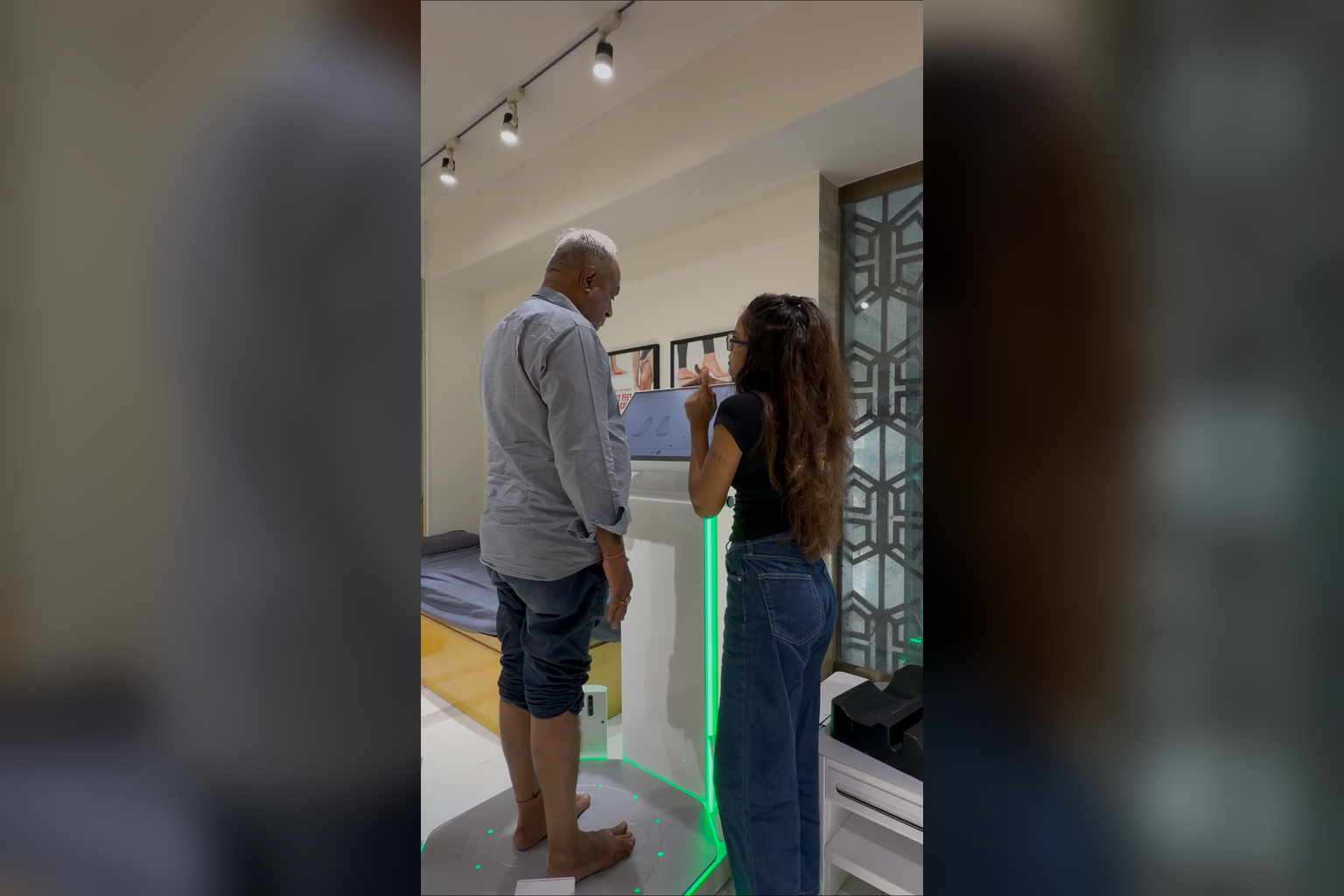
That is why we never begin with treatment. We begin with a detailed assessment.
Between each pair of vertebrae sits a disc, a cushion that absorbs load and lets your spine move. When a disc bulges or slips, it can crowd the nerve beside it. The nerve becomes irritated and inflamed, and the pain, numbness or tingling is often felt far from the back, in the leg or foot.
Rest alone rarely solves this, and neither do painkillers. They may quiet the symptoms, but the pressure on the nerve is still there.
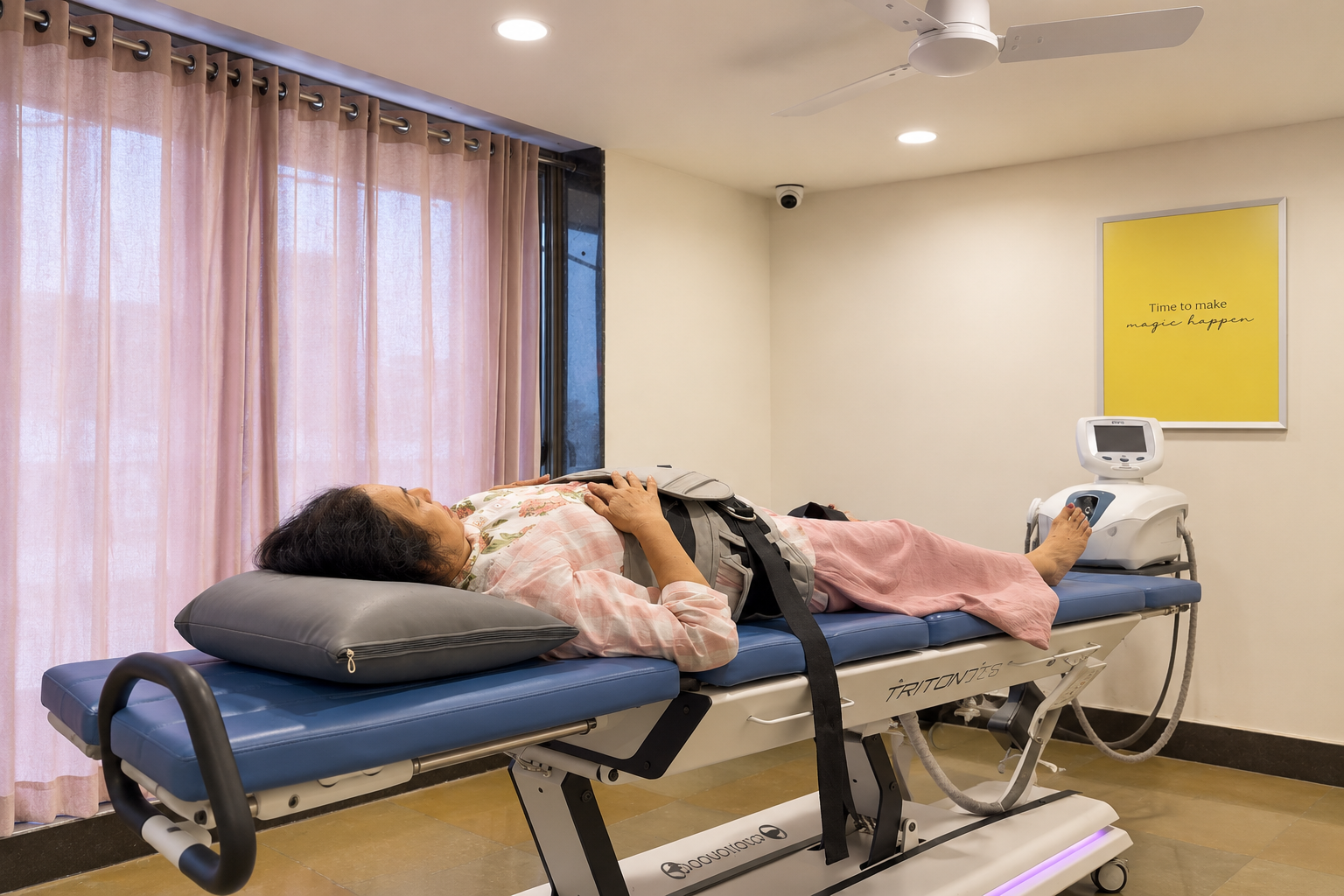
This is why spinal decompression traction is such an important part of how we treat sciatica and slipped disc.
In simple terms, decompression traction gently creates space between the vertebrae. That space can reduce the pressure on the disc and ease the squeeze on the nerve, giving the area a chance to settle and heal.
What makes it valuable is that it works on the source of the pressure, not just the pain it causes. For many patients with sciatica and disc problems, it becomes the foundation on which the rest of recovery is built. Relief that starts here tends to make everything that follows, movement and strengthening included, easier and more comfortable.
Once pressure is addressed, the irritated tissue still needs help. Laser therapy helps reduce inflammation and supports healing in the nerve, muscles and soft tissue around the affected area.
For patients, this often means less sensitivity and a more comfortable start to rehabilitation. It prepares the body to take on movement without flaring up again.
Relief is only the first half of the job. The second half is making sure the problem doesn’t return.
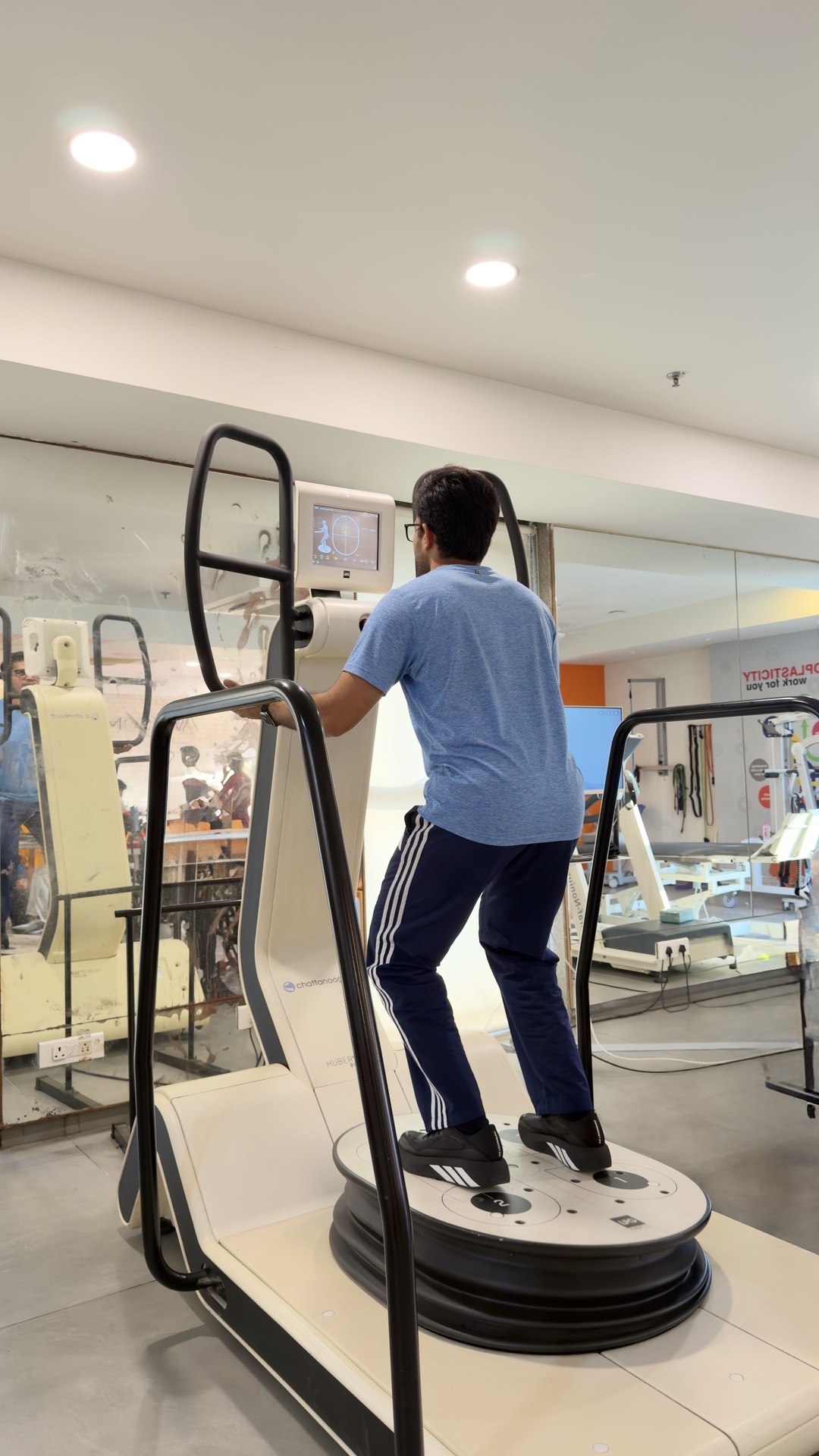
Our physiotherapists use hands-on techniques to release tight muscles and restore movement in stiff areas. Then comes guided, patient-specific exercise, which strengthens the muscles that support your spine, improves how your body moves, and teaches you to sit, bend, lift and walk without overloading your back.
This is the step that turns “I feel better” into “I stay better.”
These therapies are not offered as separate, random sessions. At Mission Health they are part of our 7-Step Spine Program: a structured, patient-specific pathway that takes you from pain to confident movement, step by step, and is built around your assessment, your spine and your goals.
Every patient’s journey looks different. The aim is the same: to help you walk, sit, work and live without fearing your back.
Consider an assessment if you have:
Seek urgent medical care if leg pain comes with loss of bladder or bowel control, numbness in the groin or inner thighs, or sudden, significant weakness in the leg. These can be signs of a serious nerve compression.
Leg pain is a message, not a diagnosis. Understanding where it comes from is what separates a short-term fix from a real recovery.
Your pain has a source. Let’s find it.
Book your spine assessment at Mission Health, the world’s largest chain of physio and rehab centres.
 Dr. Janardan Mishra
 Dr. Disha Shah
 Dr. Richa Ojha
 Dr. Bansari Patel