The Role of Robotics in Neuro Rehabilitation
 By Dr. Disha Shah
 05 May, 2025
  By Dr. Disha Shah
05 May, 2025
By Dr. Disha Shah
05 May, 2025
Neuro rehabilitation is a critical process for individuals recovering from neurological injuries or illnesses. It aims to restore lost function, improve mobility, and enhance overall quality of life. Now, robotics is revolutionizing this physiotherapy field, offering remarkable potential for recovery. Mission Health, India's first super-speciality Physiotherapy and Rehabilitation chain, is at the forefront of this revolution, combining cutting-edge Robotic technology with expert care to deliver personalized Neuro Rehabilitation programs.
Robotics in Neuro Rehabilitation refers to the use of Advanced Robotic devices and AI-driven systems to assist and augment the Neuro-rehabilitation process. These robots are not replacing therapists; instead, they act as powerful tools to enhance therapy, enabling more precise, repetitive, and intensive training. They help patients regain lost motor skills, improve balance, and even aid in cognitive recovery.
Robotics offers several key advantages in Neuro Rehabilitation. It facilitates faster recovery through intensive and targeted therapy. AI and robotics enable the creation of personalized rehabilitation plans, customized to each patient's specific needs. Furthermore, robotic therapy can significantly improve patient engagement and motivation, leading to better outcomes. The precision and data-driven nature of robotic systems also allow for more accurate tracking of progress.
Robotic neuro rehabilitation is highly effective in treating a wide range of neurological conditions. The integration of robotics enhances precision, consistency, and adaptability in therapy, providing significant benefits for patients with various neurological disorders.
| Neurological Condition | Role of Robotics in Rehabilitation |
|---|---|
| Arnold Chiari Malformation | Supports post-surgical rehabilitation and balance training by enhancing muscle coordination and posture control. |
| Ataxia | Improves coordination and stability through repetitive robotic-assisted movements, reducing unsteady gait. |
| Attention Deficit Hyperactivity Disorder (ADHD) | Uses interactive robotic therapy to improve focus, cognitive function, and motor planning. |
| Autism | Employs robotic therapy for sensory integration, social engagement, and fine motor skill development. |
| Brain Stroke | Facilitates motor recovery by retraining affected limbs and improving neuroplasticity. |
| Cerebellar Ataxia | Enhances gait stability and motor control by providing controlled robotic-assisted exercises. |
| Cerebral Palsy | Aids in motor function improvement by strengthening muscles and supporting movement training. |
| Delayed Milestones | Encourages movement and muscle activation in children to support developmental progress. |
| Encephalopathy | Assists in cognitive and motor skill rehabilitation, helping restore functional abilities. |
| Epilepsy and Seizure Disorders | Enhances motor control and neurological retraining to reduce seizure-related impairments. |
| GBS (Guillain Barre' Syndrome) | Supports muscle strength recovery and mobility restoration through guided robotic therapy. |
| Hydrocephalus | Improves balance, coordination, and motor functions with robotic-assisted rehabilitation exercises. |
| Motor Neuron Disease (MND) | Helps maintain mobility and muscle function to slow disease progression. |
| Multiple Sclerosis | Provides motor coordination and muscle activation training to manage symptoms effectively. |
| Muscular Dystrophy | Aids in muscle strengthening and functional independence by supporting weakened muscles. |
| Myasthenia Gravis | Enhances endurance and mobility by offering controlled robotic-assisted movement training. |
| Myopathies | Supports muscle function recovery through targeted robotic exercise therapy. |
| Nerve Injuries | Promotes nerve regeneration and restores functional movement with guided exercises. |
| Neuropathies | Helps in sensory retraining, improving movement control and reducing pain. |
| Paralysis | Facilitates movement and muscle re-education with advanced robotic assistance. |
| Parkinsonism | Improves gait, balance, and coordination, reducing tremors and movement difficulty. |
| Spina Bifida | Assists in mobility training and muscle activation to enhance movement control. |
| Spinal Cord Injury | Restores independence by enabling mobility through robotic exoskeletons. |
| Transverse Myelitis | Aids in neuromuscular rehabilitation and functional movement retraining. |
| Traumatic Brain Injury (Head Injury) | Supports cognitive recovery and motor function rehabilitation for better independence. |
With cutting-edge robotic neuro rehabilitation technologies, these conditions can be effectively managed, offering patients greater independence, improved mobility, and enhanced quality of life.
Robots play a crucial role in Neuro Rehabilitation. They assist in motor recovery by guiding patients through repetitive movements, helping to rebuild neural connections and regain lost function. For gait training, exoskeletons provide support and enable patients to walk again, even after significant neurological impairment. Upper limb therapy is greatly enhanced by robotic arms that support hand and arm movement, improving strength and dexterity. Even cognitive rehabilitation benefits from AI-driven robots that engage patients in interactive exercises, improving mental processing and memory.
Mission Health utilizes a range of Advanced Robotic devices in its Neuro-Rehabilitation centre, including:
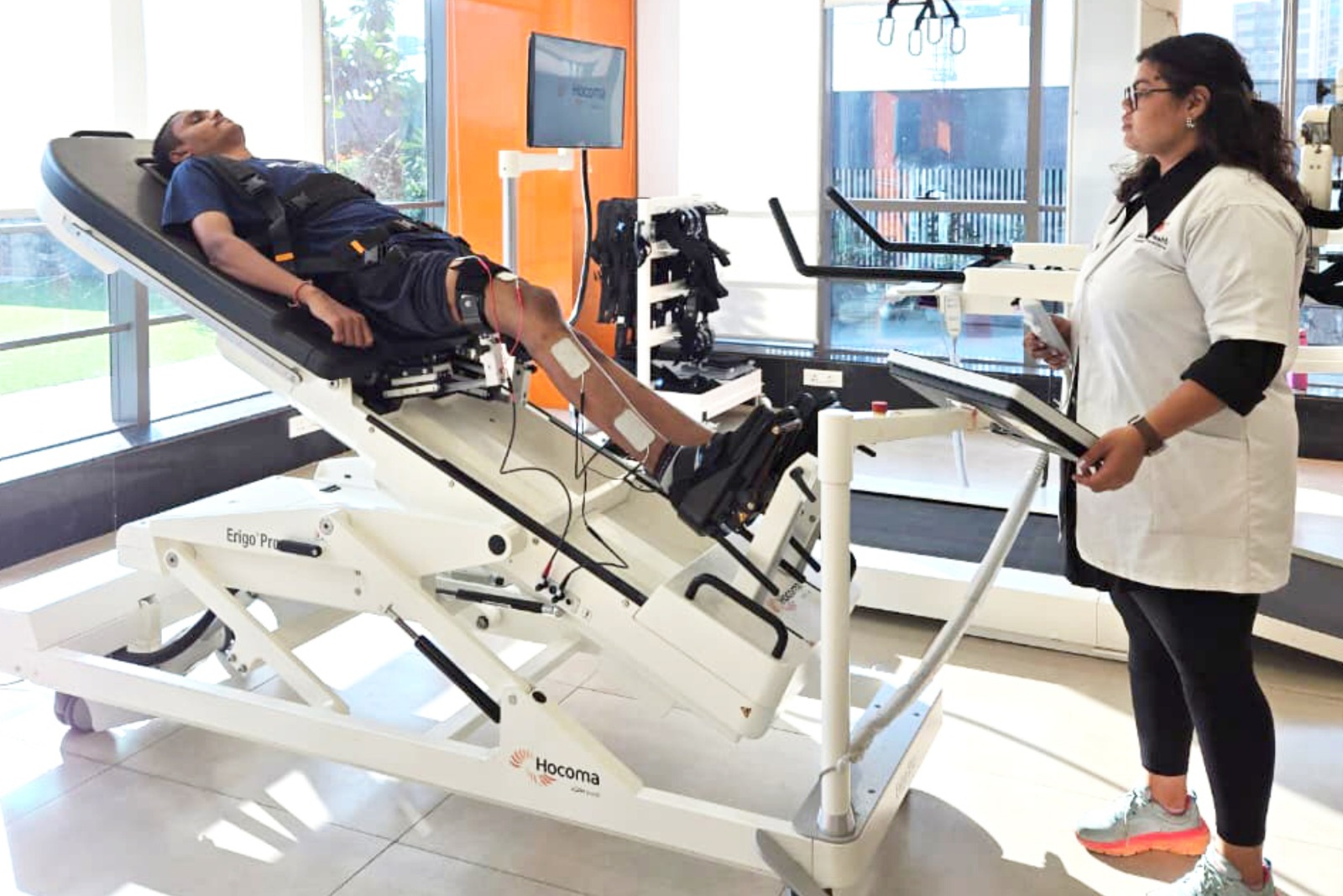
This is a legs and walking robot designed to assist patients with gait training. It helps individuals relearn how to walk by providing support and guidance, promoting proper movement patterns and improving walking ability.
This robotic device focuses on shoulder and arm rehabilitation. It supports and assists with arm movements, helping patients regain strength, range of motion, and coordination in their upper limbs after neurological injury.
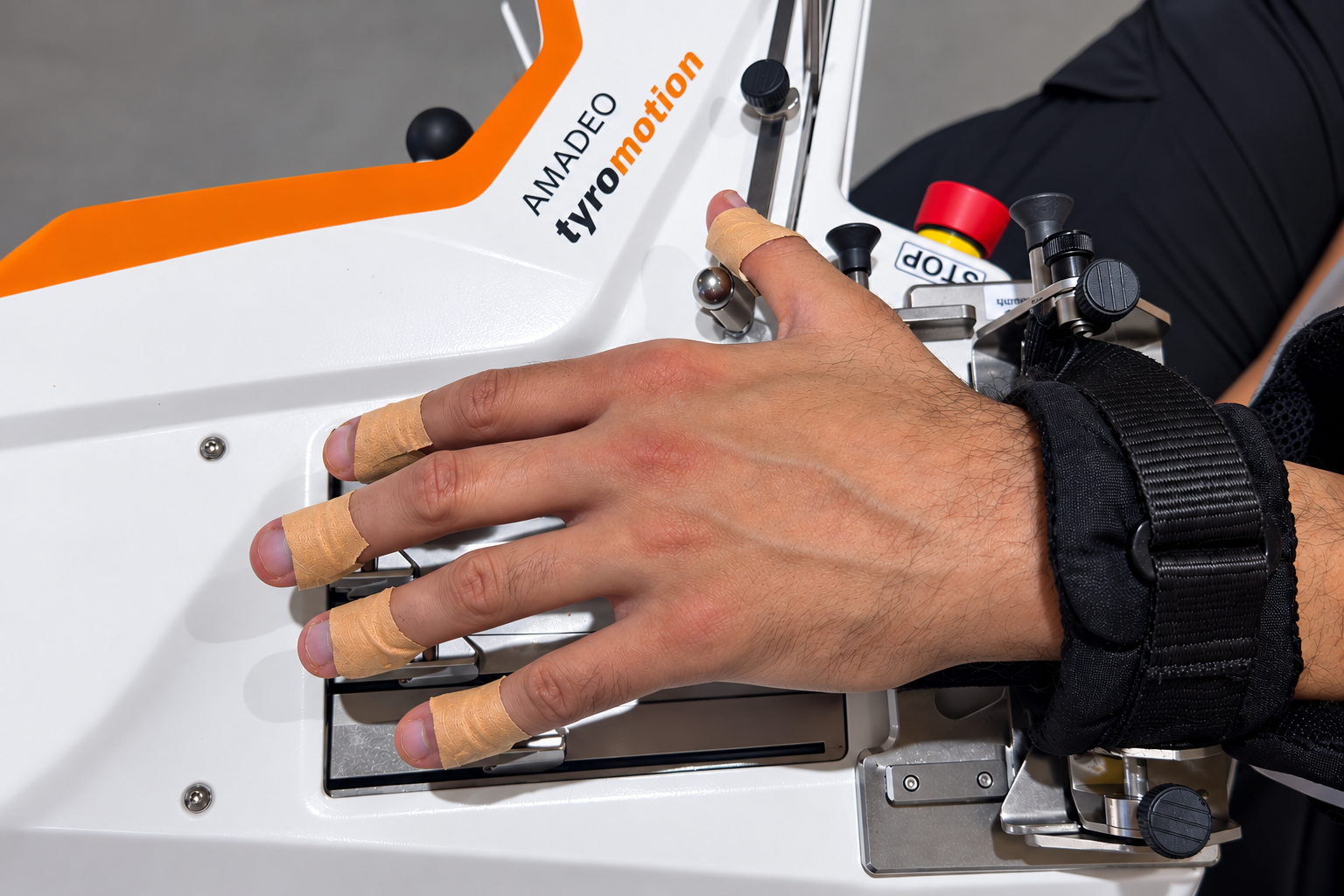
This hand robot is designed to improve hand function and dexterity. It assists with various hand movements, helping patients regain grip strength, fine motor control, and the ability to perform everyday tasks.
Mission Health also employs specialized Robotic devices for the wrist and ankle joints. These Robots help improve joint mobility, strength, and coordination, which are important for overall functional recovery.
This assistive device provides support and reduces weight-bearing during gait training. It allows patients to practice walking with greater confidence and reduced risk of falls, facilitating earlier mobilization and rehabilitation.
Intensive, repetitive training with robotic assistance accelerates the rehabilitation process by promoting neuroplasticity and strengthening neural connections. This leads to quicker improvements in motor function and overall recovery.
Robotic devices like exoskeletons and gait trainers enable patients to regain lost movement and independence, improving their ability to walk, stand, and perform daily activities. This increased mobility enhances their quality of life.
Robotic systems allow therapists to tailor rehabilitation programs to each patient's specific needs and abilities, ensuring that the therapy is targeted and effective. This personalized approach optimizes outcomes.
The interactive and engaging nature of robotic therapy, often incorporating game-like elements, increases patient motivation and adherence to the rehabilitation program. This improved engagement leads to better results.
Robotic systems collect data on patient performance, providing objective measures of progress and allowing therapists to adjust the therapy as needed. This data-driven approach ensures optimal outcomes.
Robots assist therapists, allowing them to focus on more complex aspects of patient care and manage larger caseloads. This increases efficiency and access to care.
Robots provide precise measurements of progress, making it easier to track improvements and identify areas where further therapy is needed. This objective data enhances the therapeutic process.
Robotic therapy can lead to sustained improvements in motor function and independence, even after the formal rehabilitation program has ended. These long-term gains enhance quality of life.
Mission Health is India's first super-speciality Physiotherapy and Rehabilitation chain. We offer cutting-edge robotic therapy solutions, combined with personalized Neuro Rehabilitation programs. Our team of expert therapists provides advanced care, utilizing the latest technology to maximize patient outcomes. We believe in a holistic approach to rehabilitation, addressing not only physical impairments but also cognitive and emotional well-being.
Robotics is revolutionizing Neuro Rehabilitation, offering new hope for those with neurological conditions. It is found that Neuro-Robotics Physiotherapy in combination with Rehabilitation can reduce the recovery time by one fourth as compared to conventional physiotherapy. Precise, intensive, and personalized robotic therapy helps patients achieve better outcomes and regain independence. Mission Health provides access to these innovative technologies, empowering patients to reach their full potential. Contact us today to explore robotic therapy options and begin your journey to recovery.
Robotics plays a crucial role in neuro rehabilitation by providing precise, repetitive, and adaptive therapy for individuals recovering from neurological conditions.
Robots assist by enhancing movement, improving balance, and retraining the brain through AI-driven, sensor-based rehabilitation.
Neuro robotics combines robotic technology with neuroscience to aid in cognitive and physical rehabilitation, often using AI-based assistance.
They are used in gait training, upper limb recovery, motor therapy, and cognitive rehab.
Robotic Neuro Rehabilitation refers to the use of automated, sensor-guided robotic devices to help patients regain neurological and motor functions.
No, robotic neuro rehabilitation is not typically painful. The therapy is designed to be challenging but not painful.
The duration of robotic neuro rehabilitation varies depending on the individual's condition and progress.
.
 Dr. Janardan Mishra
 Dr. Richa Ojha
 Dr. Bansari Patel
 Dr. Aalap Shah